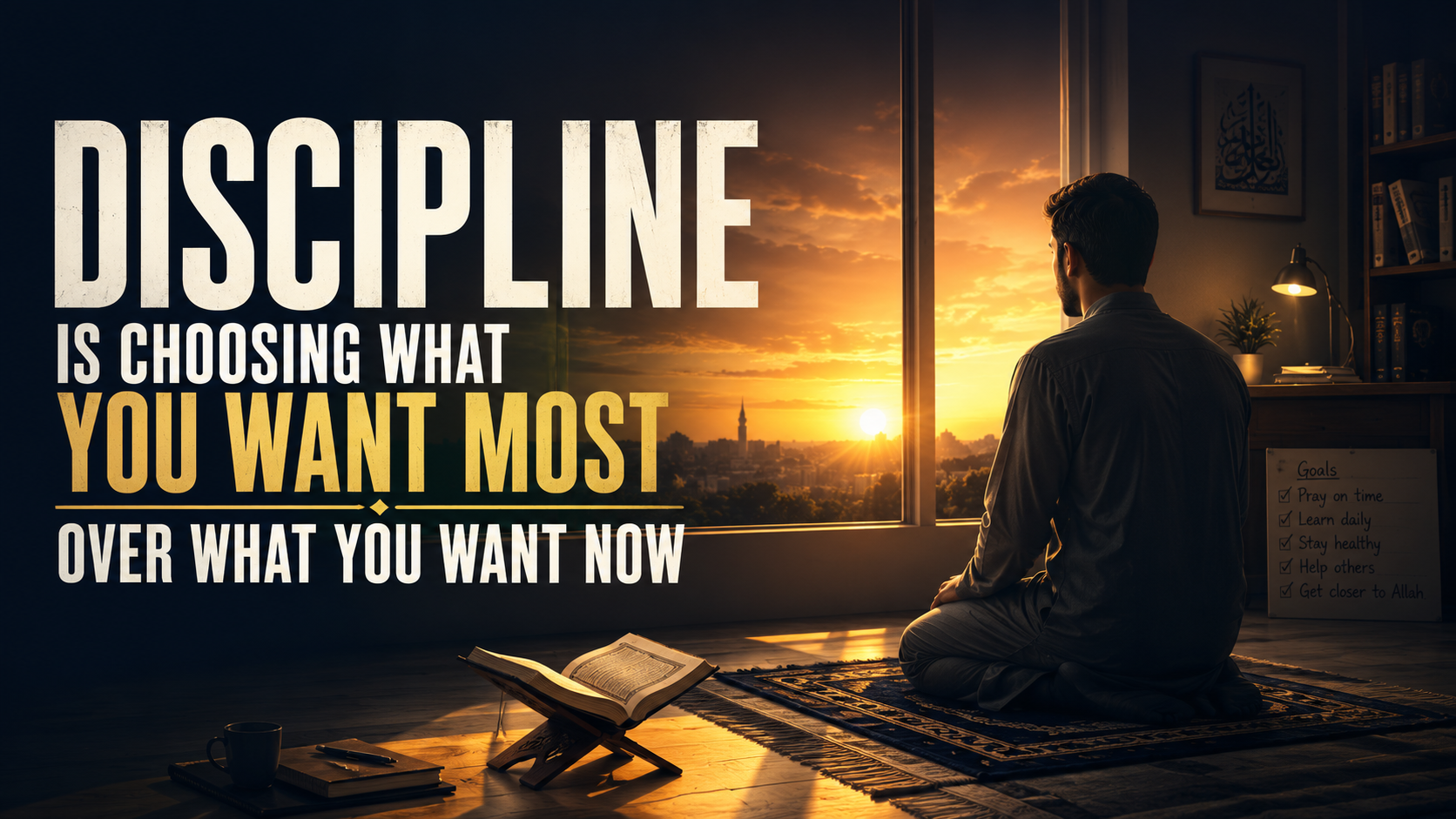
Discipline Is Choosing What You Want Most Over What You Want Now
نظم و ضبط: آج کی خواہش پر کل کے مقصد کو ترجیح دینے کا نام
Most people wait to feel motivated before they take action.
They say, "I'll start tomorrow." Or, "I'll do it when I feel ready."
The problem is that motivation comes and goes. Some days we feel inspired, while on others we don't feel like doing anything at all.
Discipline is different.
Discipline means doing what needs to be done, even when you don't feel like doing it. It is the bridge between goals and achievement.
Whether you want to strengthen your faith, build a successful career, improve your health, or develop a better character, discipline is often more important than talent or motivation.
Striving Leads to Guidance
Allah says:
"As for those who strive in Our cause, We will surely guide them to Our ways. Indeed, Allah is with those who excel in good."
(Surah Al-'Ankabut 29:69)
This verse teaches that guidance is not simply given to those who wish for it. It comes to those who make sincere effort.
The first step may be difficult, but every sincere effort brings us closer to Allah's guidance.
A Lesson from Imam Ali (AS)
Imam Ali (AS) said:
"The best deed is that which you continue to perform."
Reference: Ghurar al-Hikam wa Durar al-Kalim (chapter on perseverance and consistency).
One extraordinary effort may impress people for a day.
A small action repeated every day can change a lifetime.
Reading a few pages daily, praying on time, exercising regularly, or learning one new thing each day may seem small, but consistency turns ordinary actions into extraordinary results.
True Strength Is Self-Control
Imam Musa al-Kazim (AS) taught that true strength is not found in defeating others but in controlling one's own desires and emotions.
Reference: Tuhaf al-'Uqul, sayings of Imam Musa al-Kazim (AS).
Anyone can follow their impulses.
It takes discipline to control anger, resist distractions, and choose what is right over what is easy.
Self-control is one of the strongest signs of maturity.
Discipline Creates Freedom
At first, discipline feels restrictive.
Waking up early.
Studying when others are relaxing.
Saving money instead of spending it.
Turning off your phone to focus.
These choices require effort.
Yet over time, discipline creates freedom.
Financial discipline leads to financial stability.
Health discipline leads to physical strength.
Spiritual discipline brings peace of mind.
The temporary discomfort of discipline often leads to long-term freedom.
What Modern Research Says
James Clear, author of Atomic Habits, explains that lasting success is built through small, consistent habits rather than dramatic changes.
Angela Duckworth, in Grit, found that perseverance and consistency are stronger predictors of success than talent alone.
Jocko Willink summarizes this idea with a simple phrase:
"Discipline equals freedom."
Different authors, same conclusion: success belongs to those who remain consistent.
Five Habits to Build Discipline
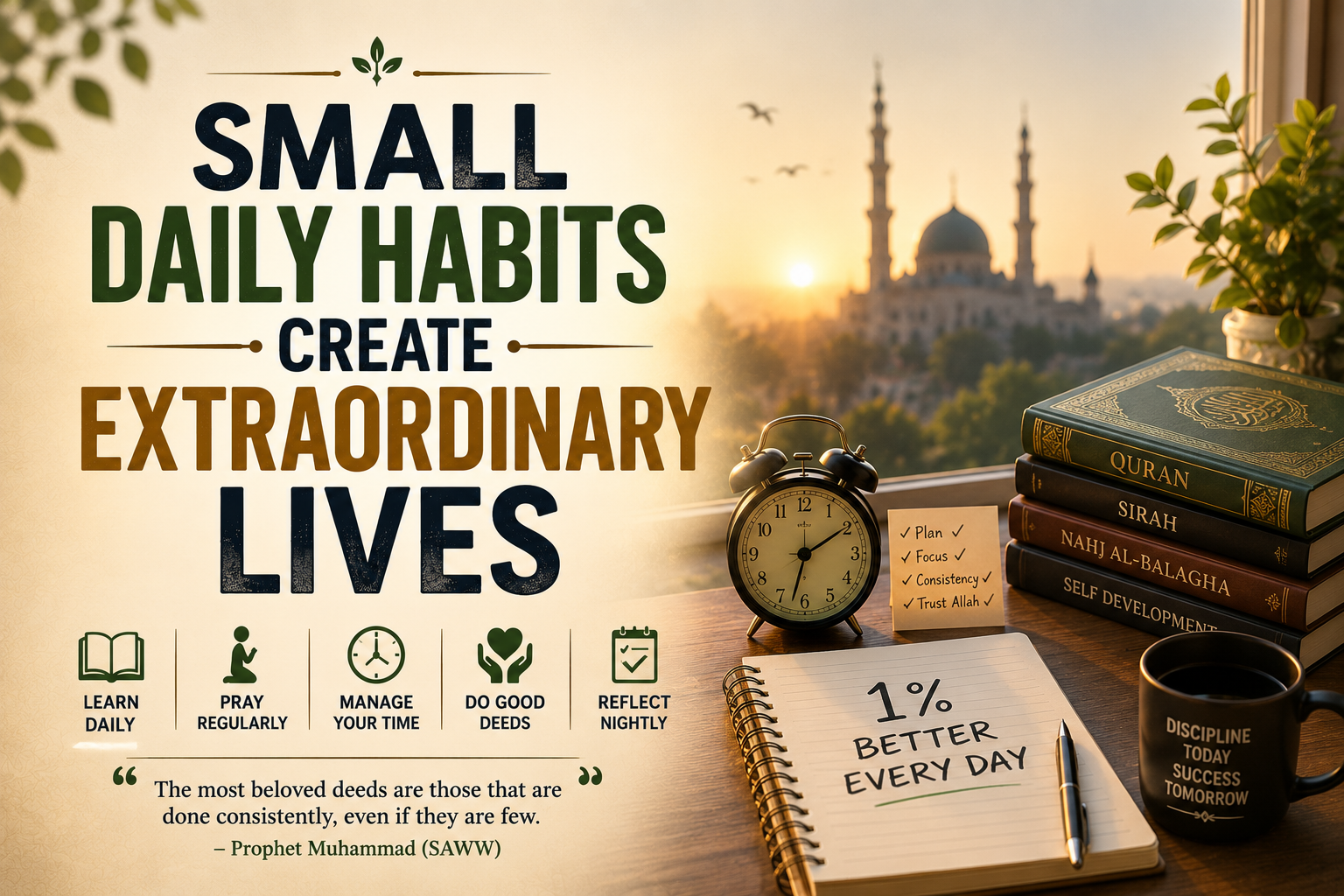
Start Small Don't try to change your entire life overnight.
Begin with one habit and practice it consistently.
Keep Your Promises to Yourself If you decide to do something, follow through.
Self-trust grows every time you keep your word.
Remove Distractions Create an environment that supports focus.
Sometimes discipline is simply making distractions harder to reach.
Focus on Progress Don't aim for perfection.
Aim to become a little better each day.
Remember Your Purpose When discipline becomes difficult, remind yourself why you started.
A clear purpose makes difficult choices easier.
Conclusion
Motivation may help you begin, but discipline keeps you moving.
The Qur'an teaches that Allah guides those who strive sincerely.
Imam Ali (AS) reminds us that the best deeds are those performed consistently.
Imam Musa al-Kazim (AS) teaches that mastering ourselves is one of the greatest forms of strength.
Every time you choose your long-term goals over temporary comfort, you strengthen your character.
Success is rarely built in a single moment.
It is built through the small choices you make every day.
Choose what you want most, not simply what you want now.
References
- The Holy Qur'an, Surah Al-'Ankabut (29:69).
- Ghurar al-Hikam wa Durar al-Kalim, chapter on perseverance and consistency.
- Tuhaf al-'Uqul, sayings of Imam Musa al-Kazim (AS).
- James Clear, Atomic Habits.
- Angela Duckworth, Grit: The Power of Passion and Perseverance.
- Jocko Willink, Discipline Equals Freedom.
Reflection Question
When faced with a choice between immediate comfort and long-term growth, which one do I usually choose, and what does that choice say about the future I am creating?
This article is a collaborative effort between Artificial Intelligence and Prof. Ali Zahoor Mehdi. While AI assisted in drafting, the core insights, refinement, and final approval are strictly the author's work.
Comments (0)
Please keep comments respectful, relevant, and thoughtful.