Character Is Greater Than Circumstances: A Timeless Lesson from Karbala
کردار، حالات سے بڑا ہوتا ہے: کربلا کا ایک عظیم سبق
Life is not always fair. Every person faces challenges, hardships, and moments when circumstances seem impossible to overcome. Many people spend their lives blaming their environment, their resources, or their situation for their failures. Yet history repeatedly shows that greatness is not determined by circumstances. It is determined by character.
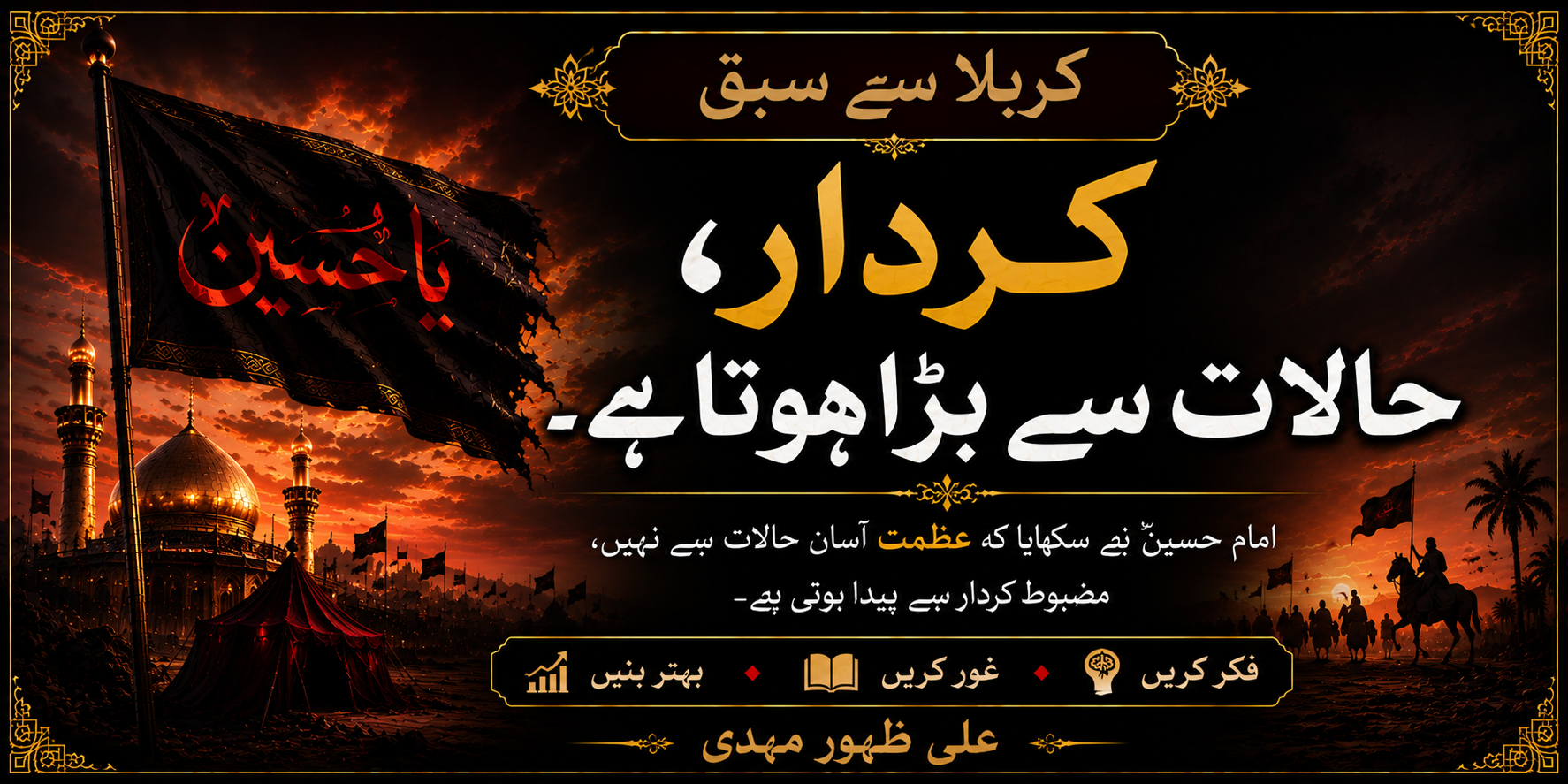
One of the most powerful examples of this truth can be found in the tragedy of Karbala. The stand of Imam Hussain (AS) teaches humanity that strong character can rise above even the most difficult conditions.
More than fourteen centuries later, the lessons of Karbala continue to inspire millions because they are not limited to a specific time or place. They speak directly to the human struggle between principles and convenience, courage and fear, truth and falsehood.
The Circumstances of Karbala
From a worldly perspective, the situation faced by Imam Hussain (AS) and his companions appeared hopeless.
They were vastly outnumbered. They had limited resources. Access to water was restricted. Families, women, and children were present among them.
On the other side stood a powerful army backed by political authority and military strength.
If success were measured only by numbers, wealth, or power, the outcome would seem obvious. However, Karbala changed the way humanity understands success.
The events of Karbala demonstrated that true success is not always found in victory on the battlefield. Sometimes success lies in remaining faithful to one's principles, even when the cost is great.
The Power of Character
Imam Hussain (AS) had opportunities to compromise. He could have chosen personal safety, comfort, or political convenience. Instead, he chose integrity.
His decision teaches us that character is revealed when a person faces pressure.
Anyone can claim to have principles when life is easy. The real test comes when standing by those principles demands sacrifice.
This is why the message of Karbala remains alive today. The political power of that era has faded into history, but the character of Imam Hussain (AS) continues to inspire people around the world.
Power may influence a generation, but character influences centuries.
A Qur'anic Perspective
The Holy Qur'an reminds believers that meaningful change begins from within.
Allah says: > "Indeed, Allah will not change the condition of a people until they change what is in themselves." (Surah Ar-Ra'd 13:11)
This verse highlights an important principle. External circumstances matter, but internal character matters more.
When a person develops honesty, patience, courage, and faith, difficult circumstances lose much of their power. Strong character allows individuals to rise above challenges that would otherwise defeat them.
Lessons for Modern Life
The lesson of Karbala is not confined to history. It remains relevant in our daily lives.
Many people believe they cannot succeed because they lack opportunities, resources, or support. While these challenges are real, they do not define a person's future.
Throughout history, remarkable individuals have emerged from difficult circumstances. What distinguished them was not their environment but their mindset and character.
In modern society, people often face pressure to compromise their values for personal gain. Whether in business, education, politics, or social life, there are moments when doing the right thing comes at a cost.
Karbala teaches us that principles should never be abandoned merely because circumstances are difficult.
Why Character Matters
Strong character provides a foundation for lasting success.
- A person with good character:
- Remains honest even when dishonesty appears profitable.
- Chooses justice over personal interest.
- Stands firm during hardship.
- Earns trust and respect from others.
- Makes decisions based on principles rather than emotions.
While wealth, status, and influence may come and go, character remains one of the most valuable assets a person can possess.
The Enduring Message of Karbala
One of the greatest lessons of Karbala is that greatness is not created by comfort.
Imam Hussain (AS) and his companions demonstrated extraordinary courage because they refused to allow circumstances to determine their values.
Their example teaches us that true dignity comes from remaining faithful to what is right, regardless of the challenges we face.
This message continues to resonate because every generation encounters its own moral tests. The details may change, but the fundamental question remains the same:
Will we allow circumstances to shape our character, or will our character rise above our circumstances?
Conclusion
The story of Karbala reminds us that circumstances do not define a person. Character does.
Imam Hussain (AS) showed the world that truth, integrity, and courage are more powerful than numbers, wealth, or political authority. His legacy continues to inspire people because it proves that a person of strong character can leave an impact that lasts far beyond their lifetime.
As we reflect during Muharram, we should remember that while circumstances are often beyond our control, our character is always our responsibility.
Reflection Question
When faced with difficult circumstances, do I allow my situation to determine my choices, or do I let my values and character guide my decisions?
انسان کی زندگی میں ایسے مواقع آتے ہیں جب حالات اس کے خلاف ہوتے ہیں۔ وسائل کم ہوتے ہیں، مشکلات زیادہ ہوتی ہیں اور کامیابی کے امکانات کم نظر آتے ہیں۔ اکثر لوگ اپنے حالات کو اپنی ناکامیوں کا سبب قرار دیتے ہیں، لیکن تاریخ میں کچھ ایسے کردار بھی گزرے ہیں جنہوں نے ثابت کیا کہ انسان کی اصل طاقت اس کے حالات نہیں بلکہ اس کا کردار ہوتا ہے۔
واقعۂ کربلا اسی حقیقت کی سب سے روشن مثال ہے۔
کربلا میں حالات کیا تھے؟
ظاہری اعتبار سے دیکھا جائے تو امام حسینؑ اور ان کے ساتھی انتہائی مشکل حالات میں تھے۔
تعداد کم تھی۔ وسائل محدود تھے۔ پانی بند کر دیا گیا تھا۔ خواتین اور بچے ساتھ تھے۔
دوسری طرف ایک بڑی فوج موجود تھی جس کے پاس ہر قسم کی ظاہری طاقت موجود تھی۔
اگر کامیابی کو صرف دنیاوی پیمانوں سے ناپا جائے تو نتیجہ پہلے ہی واضح نظر آتا تھا۔ لیکن کربلا نے دنیا کو سکھایا کہ اصل کامیابی طاقت یا تعداد میں نہیں بلکہ اصولوں اور کردار میں ہوتی ہے۔
عظیم کردار کی پہچان
امام حسینؑ نے حالات کے سامنے ہتھیار ڈالنے کے بجائے اپنے اصولوں کو ترجیح دی۔ آپؑ نے ثابت کیا کہ ایک باکردار انسان اپنے نظریات اور اقدار کو وقتی فائدے کے لیے قربان نہیں کرتا۔
اسی وجہ سے آج دنیا یزید کی طاقت کو یاد نہیں کرتی، بلکہ حسینؑ کے کردار کو سلام پیش کرتی ہے۔
طاقت وقت کے ساتھ ختم ہو جاتی ہے، لیکن کردار نسلوں تک زندہ رہتا ہے۔
قرآن مجید کی روشنی میں
اللہ تعالیٰ فرماتا ہے: "بے شک اللہ کسی قوم کی حالت نہیں بدلتا جب تک وہ خود اپنے آپ کو نہ بدلیں۔" (سورۃ الرعد، 13:11)
یہ آیت اس حقیقت کی طرف اشارہ کرتی ہے کہ اصل تبدیلی انسان کے اندر سے شروع ہوتی ہے۔ جب کردار مضبوط ہو جائے تو مشکل حالات بھی انسان کو شکست نہیں دے سکتے۔
آج کے دور کے لیے سبق
ہم میں سے اکثر لوگ اپنی زندگی کے مسائل کا ذمہ دار حالات کو ٹھہراتے ہیں۔
کوئی معاشی مشکلات کا ذکر کرتا ہے۔ کوئی معاشرتی رکاوٹوں کا۔ کوئی وسائل کی کمی کا۔
اگرچہ یہ مشکلات حقیقی ہوتی ہیں، لیکن تاریخ بتاتی ہے کہ عظیم لوگ انہی حالات میں اپنا مقام بناتے ہیں۔
کربلا ہمیں سکھاتی ہے کہ اگر کردار مضبوط ہو تو انسان ناممکن دکھائی دینے والے حالات میں بھی حق، دیانت اور عزت کے ساتھ کھڑا رہ سکتا ہے۔
کردار کیوں اہم ہے؟
- ایک مضبوط کردار انسان کو:
- مشکل وقت میں ثابت قدم رکھتا ہے۔
- غلط فیصلوں سے بچاتا ہے۔
- وقتی فائدے پر اصولوں کو ترجیح دینا سکھاتا ہے۔
- دوسروں کے لیے مثال بناتا ہے۔
- اللہ پر بھروسہ پیدا کرتا ہے۔
اسی لیے کامیاب زندگی کی بنیاد صرف علم یا دولت نہیں بلکہ اچھا کردار بھی ہے۔
کربلا کا دائمی پیغام
واقعۂ کربلا ہمیں یہ نہیں سکھاتا کہ مشکلات سے ڈرنا چاہیے، بلکہ یہ سکھاتا ہے کہ مشکلات کے باوجود اپنے اصولوں پر قائم رہنا چاہیے۔
امام حسینؑ کی زندگی ہمیں یاد دلاتی ہے کہ عظمت ہمیشہ آسان راستوں سے نہیں ملتی۔ بعض اوقات انسان کو حق کے لیے قربانی دینی پڑتی ہے، لیکن یہی قربانی اسے تاریخ میں زندہ رکھتی ہے۔
نتیجہ
کربلا کا ایک بڑا سبق یہ ہے کہ کردار، حالات سے بڑا ہوتا ہے۔
حالات بدلتے رہتے ہیں، لیکن ایک مضبوط کردار انسان کو ہر دور میں عزت دیتا ہے۔ امام حسینؑ اور ان کے وفادار ساتھیوں نے دنیا کو دکھایا کہ سچائی، وفاداری اور اصول پسندی کسی بھی ظاہری طاقت سے زیادہ مضبوط ہوتی ہے۔
آج ہمیں بھی اپنے حالات کا شکوہ کرنے کے بجائے اپنے کردار کو بہتر بنانے کی کوشش کرنی چاہیے، کیونکہ یہی وہ سرمایہ ہے جو دنیا اور آخرت دونوں میں کامیابی کا ذریعہ بنتا ہے۔
غور و فکر کا سوال
کیا میں اپنے فیصلے حالات کو دیکھ کر کرتا ہوں یا اپنے اصولوں اور کردار کو سامنے رکھ کر؟
This article is a collaborative effort between Artificial Intelligence and Prof. Ali Zahoor Mehdi. While AI assisted in drafting, the core insights, refinement, and final approval are strictly the author's work.
Comments (0)
Please keep comments respectful, relevant, and thoughtful.