Hazrat Abbas (AS): Loyalty, Thirst, and the Martyrdom of the Standard-Bearer of Karbala
حضرت عباسؑ: وفا، پیاس اور علمدارِ کربلا کی شہادت
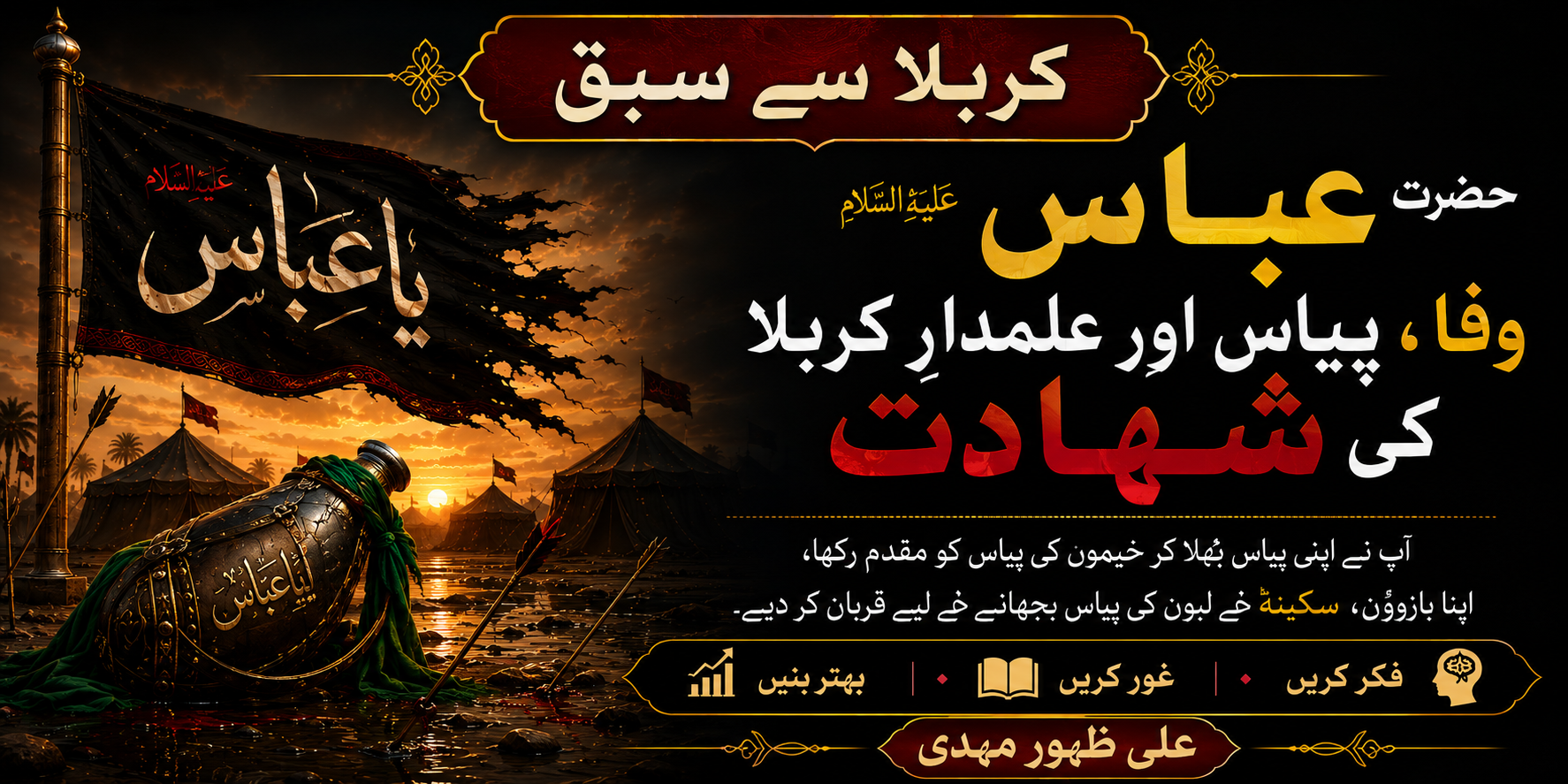
The name of Hazrat Abbas (AS) carries a deep sorrow in the memory of Karbala. He was not only a brave warrior. He was the symbol of loyalty, sacrifice, discipline, service, and complete devotion to Imam Hussain (AS).
In Karbala, thirst was not only a physical hardship. It was a test of faith, patience, loyalty, and moral strength. Hazrat Abbas (AS) showed that true loyalty means forgetting oneself for the sake of truth, responsibility, and the Imam of the time.
The Status of Hazrat Abbas (AS)
Hazrat Abbas (AS) was the son of Imam Ali (AS). Courage, dignity, loyalty, and honor were central qualities of his personality. In Karbala, he is remembered as the standard-bearer of Imam Hussain (AS).
Carrying the standard was not just a military role. It was a sign of trust, responsibility, and leadership. Hazrat Abbas (AS) carried not only a flag, but also the hopes of the camp of Hussain (AS).
The Thirst of the Tents
One of the most painful images of Karbala is the thirst of the tents. Children were suffering. The family of Imam Hussain (AS) was under severe hardship. The river was near, yet water was denied.
Hazrat Abbas (AS) became the hope of the thirsty camp. He was not only the standard-bearer. He was also remembered as the one who tried to bring water for the children.
The Final Test of Loyalty
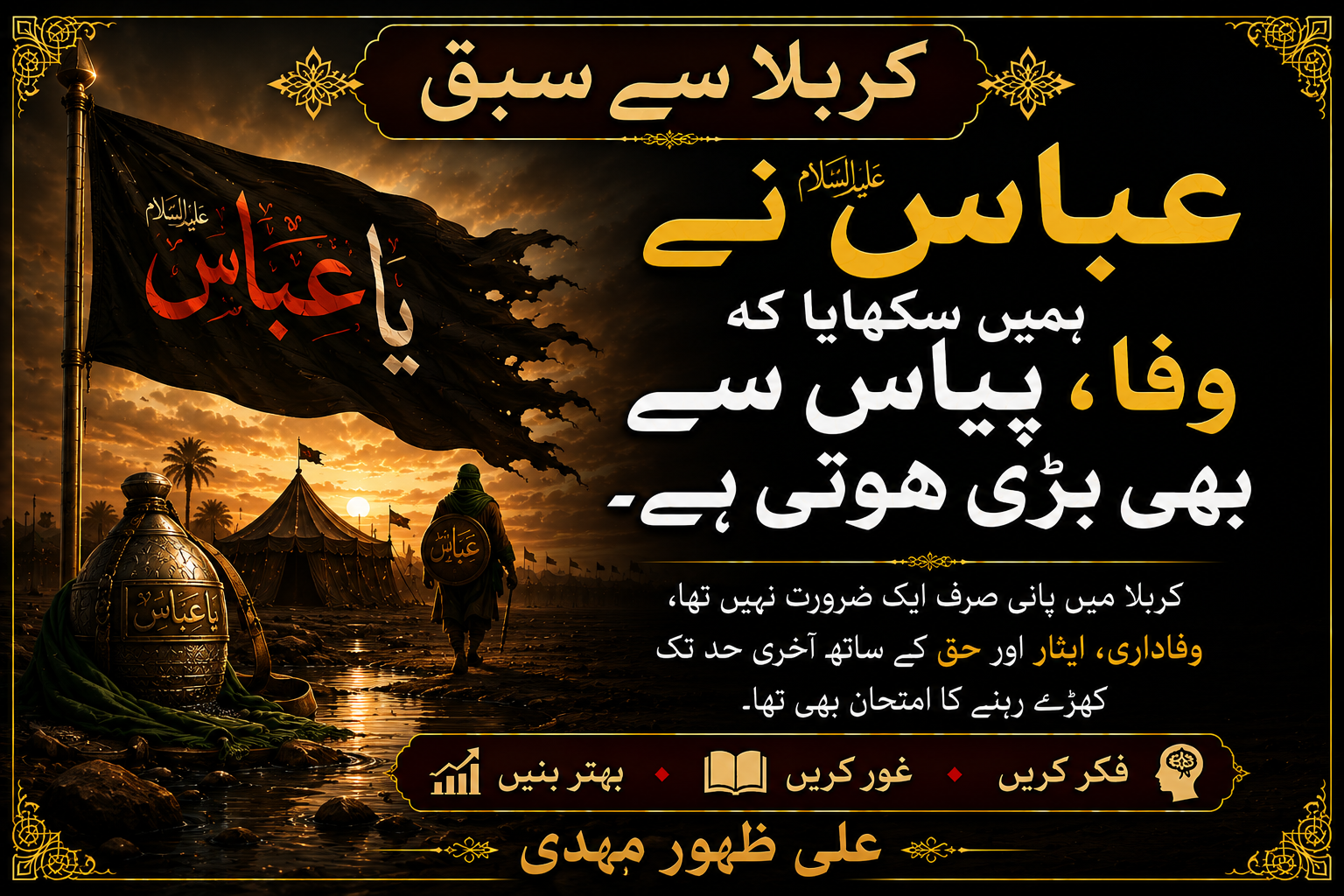
Shia maqtal sources describe that Hazrat Abbas (AS) went toward the river to bring water. He filled the water-skin, but despite his own thirst, he did not drink. His loyalty was greater than his thirst.
His thoughts were with the children, with Sakina (SA), with the tents, and with Imam Hussain (AS). This moment shows the true meaning of sacrifice. Hazrat Abbas (AS) did not think of himself. He thought of his duty.
Martyrdom of Hazrat Abbas (AS)
Hazrat Abbas (AS) continued his struggle while carrying the water-skin. He was attacked, wounded, and eventually martyred. His martyrdom was not only the martyrdom of a brave warrior. It was the martyrdom of loyalty, service, and selflessness.
When Hazrat Abbas (AS) was martyred, Imam Hussain (AS) was struck with deep grief. The loss of Abbas (AS) was not only the loss of a brother. It was the loss of the strength and support of the camp.
A Qur’anic Reflection on Selflessness
The Qur’an praises those who prefer others over themselves:
“And they give preference over themselves, even though they are in need.”
Surah Al-Hashr 59:9
Hazrat Abbas (AS) represents this spirit of selflessness. His thirst did not make him forget the thirst of others. His pain did not make him forget his responsibility.
The Message for Today
Remembering Hazrat Abbas (AS) should not remain only an emotional act. It should also transform our character.
If we remember Abbas (AS), we should learn loyalty. If we mourn Abbas (AS), we should learn service. If we honor Abbas (AS), we should learn responsibility.
In today’s world, loyalty often changes with personal interest. People stand with truth only when it is easy. But Hazrat Abbas (AS) teaches us that true loyalty is proven when sacrifice is required.
Conclusion
The martyrdom of Hazrat Abbas (AS) is one of the most heartbreaking chapters of Karbala. He taught the world that loyalty is not a word. It is sacrifice. Love is not only emotion. It is service. Faith is not only belief. It is standing with truth until the last breath.
In Karbala, the standard of Abbas (AS) fell, but the standard of loyalty rose forever.
References
- Shaykh al-Mufid, Al-Irshad, chapters on the tragedy of Karbala
- Sayyid Ibn Tawus, Al-Luhuf ala Qatla al-Tufuf
- Shaykh Abbas Qummi, Nafas al-Mahmum
- Allama Majlisi, Bihar al-Anwar, Vol. 45
- The Holy Qur’an, Surah Al-Hashr 59:9
Reflection Question
Is my loyalty limited to words, or do I stand with truth, responsibility, and principle when sacrifice is required?
This article is a collaborative effort between Artificial Intelligence and Prof. Ali Zahoor Mehdi. While AI assisted in drafting, the core insights, refinement, and final approval are strictly the author's work.
Comments (0)
Please keep comments respectful, relevant, and thoughtful.