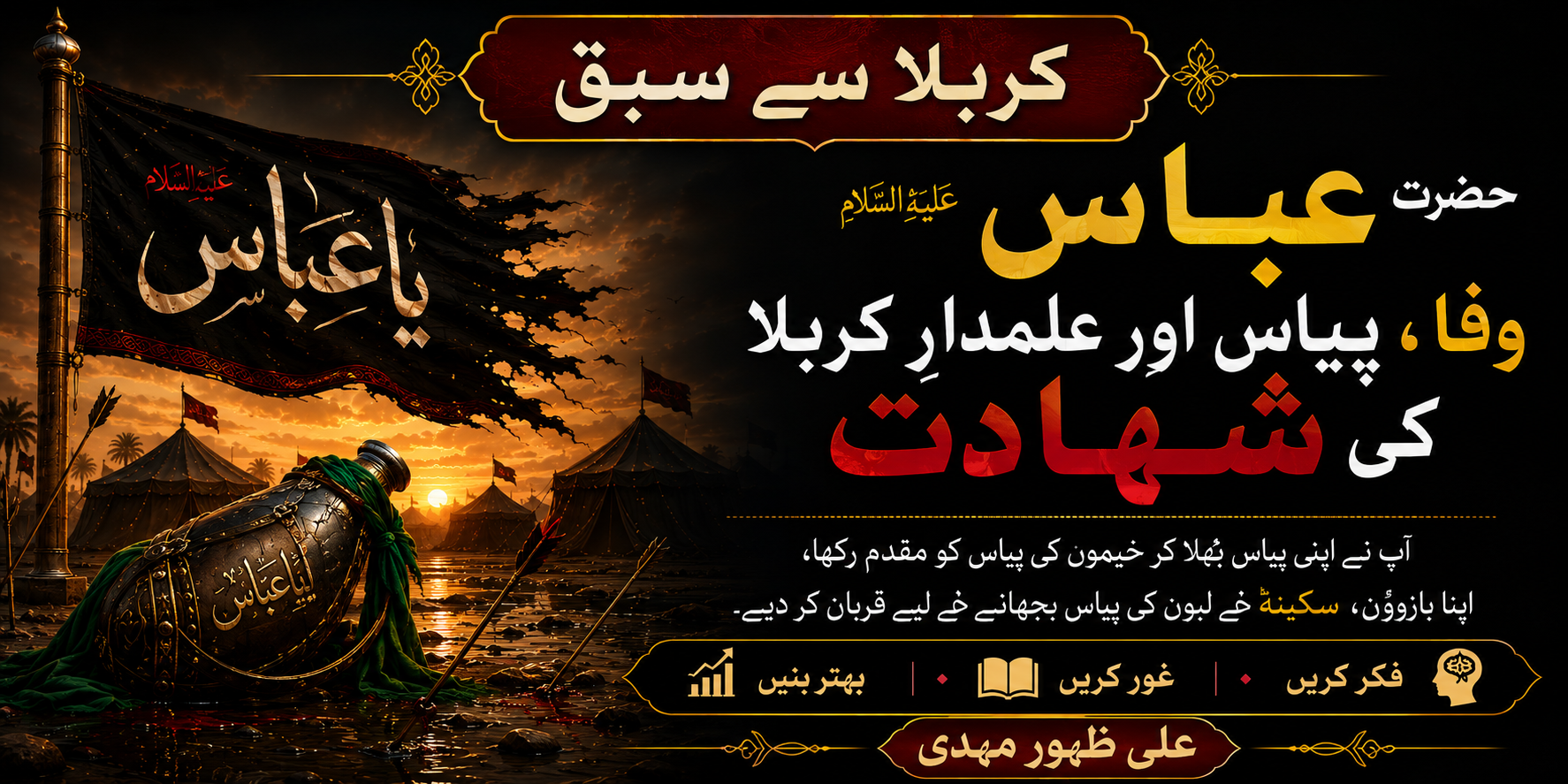
Thirst, Loyalty, and the Character of Hazrat Abbas (AS)
پیاس، وفا اور حضرت عباسؑ کا کردار: کربلا کا ایک عظیم سبق
Muharram is not only a time of mourning. It is also a time to reflect on the highest examples of faith, loyalty, sacrifice, and moral courage. Among the many personalities remembered in Karbala, Hazrat Abbas (AS) holds a special place because his character represents loyalty at its highest level.
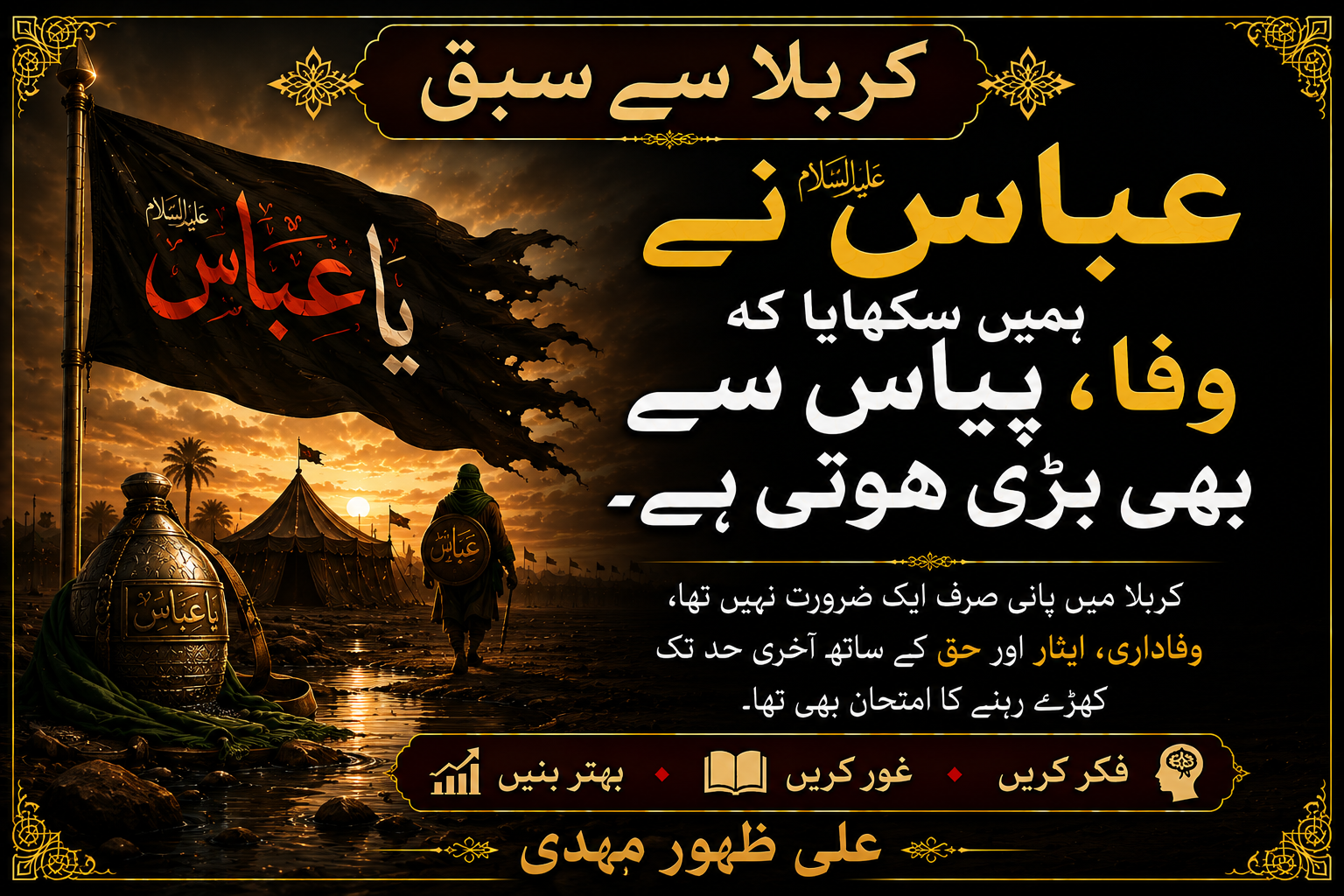
In Karbala, thirst was not only a physical hardship. It became a test of faith, responsibility, patience, and sacrifice. Hazrat Abbas (AS) showed that true loyalty is not proven by words, but by action when the situation becomes difficult.
The Trial of Thirst in Karbala
One of the most painful parts of Karbala was the restriction of water. The camp of Imam Hussain (AS) included children, women, and family members who were suffering from thirst. The situation became more severe with every passing moment.
In such circumstances, a person’s true character becomes visible. When someone is personally suffering, yet still thinks about others, that is a sign of moral greatness.
Hazrat Abbas (AS) is remembered because he placed loyalty, responsibility, and service above personal comfort.
The Meaning of Loyalty
Loyalty is not merely emotional attachment. It is a serious commitment that becomes visible during hardship.
Hazrat Abbas (AS) was loyal to Imam Hussain (AS), to truth, and to the mission of Karbala. His loyalty was not based on worldly gain or personal benefit. It was based on faith, love, responsibility, and recognition of truth.
Karbala teaches us that loyalty is tested when sacrifice becomes necessary.
A Qur’anic Perspective on Selflessness
The Holy Qur’an praises those who prefer others over themselves:
"And they give preference over themselves, even though they are in need." (Surah Al-Hashr 59:9)
This verse reflects the spirit of selflessness. A person of faith does not live only for personal comfort. He feels responsibility for others and is willing to sacrifice for a higher purpose.
The character of Hazrat Abbas (AS) beautifully reflects this principle.
Strength Used for Service
Hazrat Abbas (AS) was known for courage and strength, but Karbala teaches us that true greatness is not in strength alone. Greatness lies in how strength is used.
If strength is used for ego, it becomes arrogance.
If strength is used for oppression, it becomes injustice.
But if strength is used for service, loyalty, and truth, it becomes honor.
Hazrat Abbas (AS) showed that power becomes noble when it serves truth and protects the vulnerable.
Lessons for Modern Life
The lesson of Hazrat Abbas (AS) is deeply relevant today.
Every person faces tests of loyalty in life:
- Loyalty to family
- Loyalty to truth
- Loyalty to principles
- Loyalty to responsibilities
- Loyalty to faith
Many people remain loyal only when it is easy or beneficial. But true loyalty appears when it requires sacrifice.
Karbala asks us to examine ourselves. Do we remain committed when things become difficult? Do we stand with truth when it costs us something? Do we serve others only when convenient, or even when it requires personal sacrifice?
Practical Lessons from Hazrat Abbas (AS)
1. Loyalty must be shown through action
Words are easy. Real loyalty is proven when action is required.
2. Responsibility is greater than personal comfort
A noble person does not place comfort above duty.
3. Strength should serve truth
Power, knowledge, influence, and ability should be used for justice and service.
4. Sacrifice gives meaning to love
Love without sacrifice remains incomplete.
5. Faith creates selflessness
A person connected to Allah learns to care for others beyond personal benefit.
Conclusion
Karbala teaches us that loyalty is greater than thirst, comfort, and personal desire. Hazrat Abbas (AS) showed the world that true loyalty is not a slogan. It is a living commitment proven through sacrifice.
His character reminds us that faith is not only found in words of devotion, but in moments when a person chooses responsibility over comfort, truth over safety, and service over self-interest.
As we remember Karbala, we should not only admire the loyalty of Hazrat Abbas (AS). We should ask whether our own loyalty to truth, faith, family, and responsibility is strong enough to survive hardship.
Reflection Question
Do I place loyalty, responsibility, and truth above my personal comfort when life tests me?
This article is a collaborative effort between Artificial Intelligence and Prof. Ali Zahoor Mehdi. While AI assisted in drafting, the core insights, refinement, and final approval are strictly the author's work.
Comments (0)
Please keep comments respectful, relevant, and thoughtful.