Patience Is the Greatest Strength of Faith: A Timeless Lesson from Karbala
صبر، ایمان کی سب سے بڑی طاقت ہے: کربلا کا ایک عظیم سبق
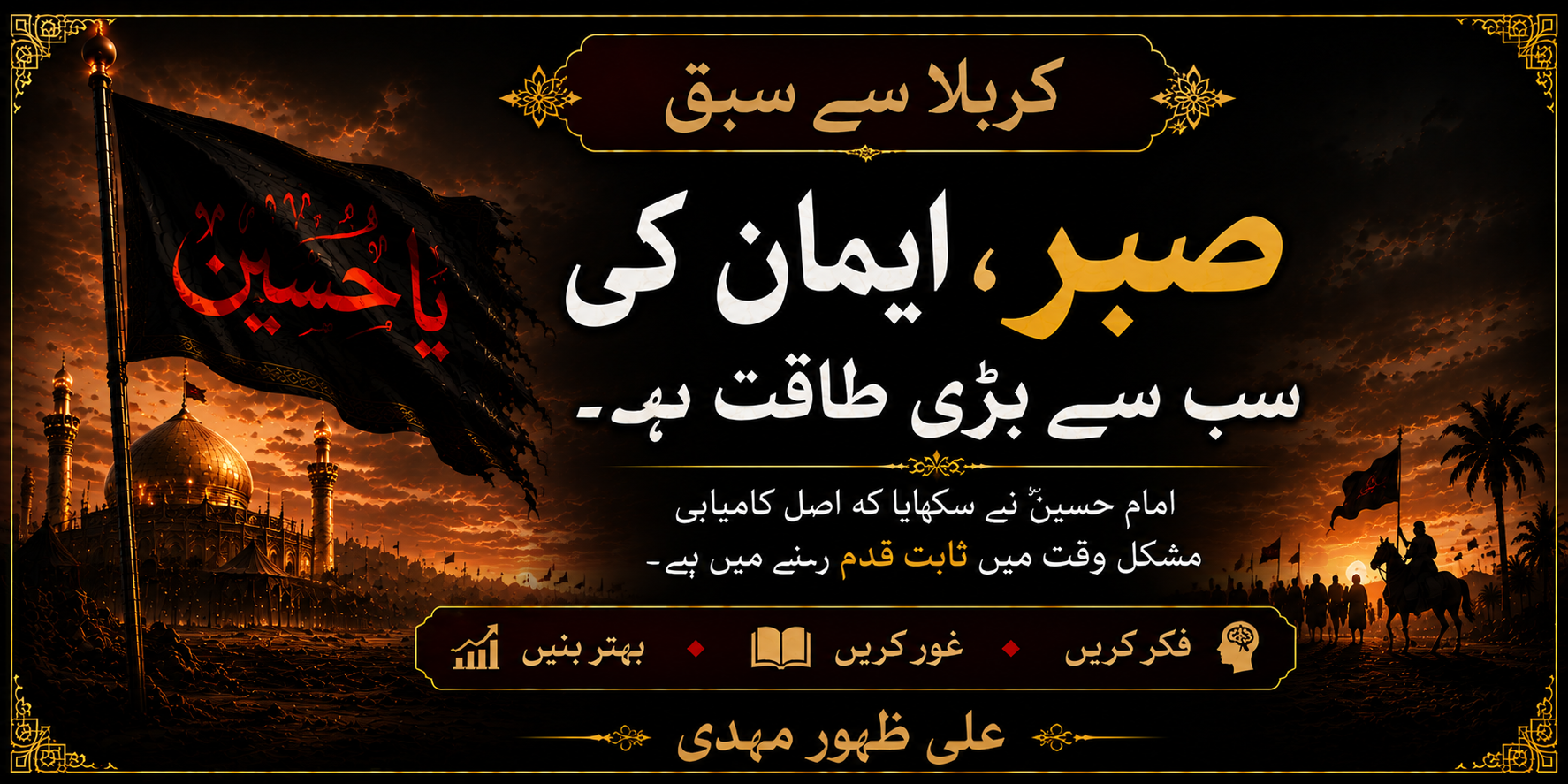
Muharram is not only a time of grief and remembrance. It is also a time of reflection, self-examination, and learning from one of the most powerful events in Islamic history. Among the many lessons of Karbala, one of the deepest and most transformative is the lesson of patience.
Patience in Islam is not passive weakness. It is not helpless silence. It is not the acceptance of injustice. True patience is a sign of inner strength, deep faith, spiritual clarity, and trust in Allah. It is the ability to remain firm on truth when circumstances become difficult, when loss becomes overwhelming, and when the road of righteousness appears lonely and painful.
The tragedy of Karbala teaches us that patience is not simply a virtue for difficult times. It is one of the greatest strengths a believer can possess.
What Does Patience Really Mean in Islam?
In everyday language, patience is often understood as merely tolerating hardship. But in Islamic thought, sabr carries a much deeper meaning.
Patience means:
- Remaining steadfast upon truth
- Controlling one’s emotions in moments of pain and anger
- Trusting Allah when life becomes uncertain
- Refusing to abandon principles under pressure
- Continuing to do what is right even when it is difficult
In other words, patience is not just about enduring suffering. It is about maintaining faith, dignity, and moral clarity while facing suffering.
A patient person is not someone who feels no pain. Rather, it is someone who experiences pain but does not allow that pain to destroy faith, purpose, or character.
Karbala: The Highest Example of Patience
If one were to search history for the highest examples of patience, Karbala would stand among the greatest of them all.
Imam Hussain (AS), his family, and his companions faced a level of hardship that is difficult to fully comprehend. Water was cut off. Children were suffering from thirst. Companions were martyred one after another. The camp was surrounded by a far larger and stronger army. Outwardly, every worldly support seemed absent.
Yet in the middle of this unimaginable suffering, Imam Hussain (AS) did not abandon truth, dignity, or trust in Allah.
This is what makes Karbala such a profound school of patience.
The patience of Imam Hussain (AS) was not the patience of surrender. It was the patience of conviction. It was patience rooted in certainty that truth is more valuable than comfort, and faith is more valuable than survival without principle.
What Imam Hussain (AS) Teaches Us About Patience
The life and sacrifice of Imam Hussain (AS) teach us that true success is not found in ease, but in steadfastness.
It is easy to speak about principles when life is comfortable. It is easy to remain calm when there is no loss, no fear, and no pressure. The real test of faith comes when hardship arrives and the believer must decide whether to remain loyal to truth or compromise for relief.
Imam Hussain (AS) teaches us that patience means continuing to stand for what is right, even when the cost is high.
He teaches us that faith is not measured only by prayer and words, but also by how a person responds when tested.
The Qur’anic Importance of Patience
The Qur’an repeatedly connects patience with divine help, guidance, and reward. Allah says:
“O you who believe, seek help through patience and prayer. Indeed, Allah is with the patient.” > (Surah Al-Baqarah 2:153)
This verse is powerful because it presents patience not merely as a noble quality, but as a source of strength and divine support. When worldly means feel limited, patience and prayer become the spiritual pillars that keep a believer standing.
Allah also says:
“Indeed, the patient will be given their reward without measure.” > (Surah Az-Zumar 39:10)
This verse reminds us that patience is never wasted in the sight of Allah. Every tear, every silent struggle, every moment of restraint, and every act of steadfastness is known to Him.
Patience in Karbala Was Not Weakness
One of the most important things to understand is that the patience of Karbala was not weakness. It was not passivity, and it was not fear.
Patience does not mean accepting falsehood. Patience does not mean surrendering to injustice. Patience does not mean abandoning honor, dignity, or truth.
Rather, patience means bearing hardship while remaining committed to what is right.
This is exactly what we see in Karbala. Imam Hussain (AS) did not compromise with falsehood simply to avoid pain. He endured pain because truth was more important than comfort. That is why his patience was not passive suffering. It was moral greatness.
Why This Lesson Matters Today
The message of Karbala is not limited to the past. It speaks directly to modern life.
Today, people face different kinds of trials:
- Financial pressure
- Family problems
- Emotional pain
- Mental exhaustion
- Health struggles
- Social injustice
- Loneliness and disappointment
In these moments, people often ask: Why is this happening to me? How much more can I endure? What should I do when life becomes too heavy?
Karbala does not remove our pain, but it gives our pain meaning. It teaches us that hardship is not the end of the story. The real question is not whether life becomes difficult. The real question is how we respond when it does.
Do we break completely?
Do we abandon our values?
Do we become bitter, hopeless, and spiritually empty?
Or do we turn to Allah, hold on to truth, and continue walking with patience and dignity?
That is where the lesson of Karbala becomes deeply personal.
What Patience Gives a Believer
Patience is not only a religious virtue. It is a force that shapes a person from the inside. A believer who develops patience gains many strengths.
1. Inner Stability
Patience protects a person from emotional collapse. It creates calmness and resilience even in hardship.
2. Better Judgment
When a person learns patience, they are less likely to make destructive decisions in anger, fear, or desperation.
3. Stronger Trust in Allah
Patience reminds the heart that every hardship has a purpose and that Allah never abandons His servants.
4. Moral Strength
Patience helps a person remain honest, just, and faithful even when wrongdoing appears easier.
5. Spiritual Growth
Trials often reveal what comfort hides. Through patience, the believer grows closer to Allah and deeper in faith.
The Difference Between Patience and Defeat
Many people confuse patience with giving up. But these are not the same thing.
Defeat is when a person loses hope and abandons purpose.
Patience is when a person feels the weight of hardship, yet still refuses to abandon faith and truth.
Defeat is surrendering the soul.
Patience is protecting the soul.
Karbala teaches us that a believer may be wounded, exhausted, or surrounded by difficulty, but if they remain faithful to Allah and firm upon truth, they have not truly lost.
The Message of Muharram for Our Lives
Muharram invites us to look beyond emotion and ask what Karbala demands from us today.
It asks us:
- How do I react when life becomes difficult?
- Do I become distant from Allah in hardship, or closer to Him?
- Do I hold on to truth when it becomes costly?
- Do I treat patience as passive waiting, or as a powerful act of faith?
These are not abstract questions. They shape how we live, how we worship, how we endure, and how we grow.
Conclusion
Karbala teaches us that patience is one of the greatest strengths of faith.
It is not the patience of silence before injustice, nor the patience of weakness before suffering. It is the patience of a believer who knows that truth is worth sacrifice, that Allah sees every struggle, and that hardship cannot defeat a heart that remains connected to Him.
Imam Hussain (AS) and the people of Karbala showed humanity that patience is not simply enduring pain. It is remaining loyal to Allah, to truth, and to dignity even when pain becomes overwhelming.
As we reflect in Muharram, we should not only mourn Karbala. We should also ask whether we are learning from it. And one of its greatest lessons is this: when trials come, patience rooted in faith becomes a believer’s greatest strength.
Reflection Question
When I face hardship, do I treat patience as mere endurance, or do I embrace it as a form of faith, trust in Allah, and steadfastness upon truth?
This article is a collaborative effort between Artificial Intelligence and Prof. Ali Zahoor Mehdi. While AI assisted in drafting, the core insights, refinement, and final approval are strictly the author's work.
Comments (0)
Please keep comments respectful, relevant, and thoughtful.