Hazrat Ali Akbar (AS): Youth, the Resemblance to the Prophet, and a Great Sacrifice of Karbala
حضرت علی اکبرؑ: جوانی، مشابہتِ رسولؐ اور کربلا کی عظیم قربانی
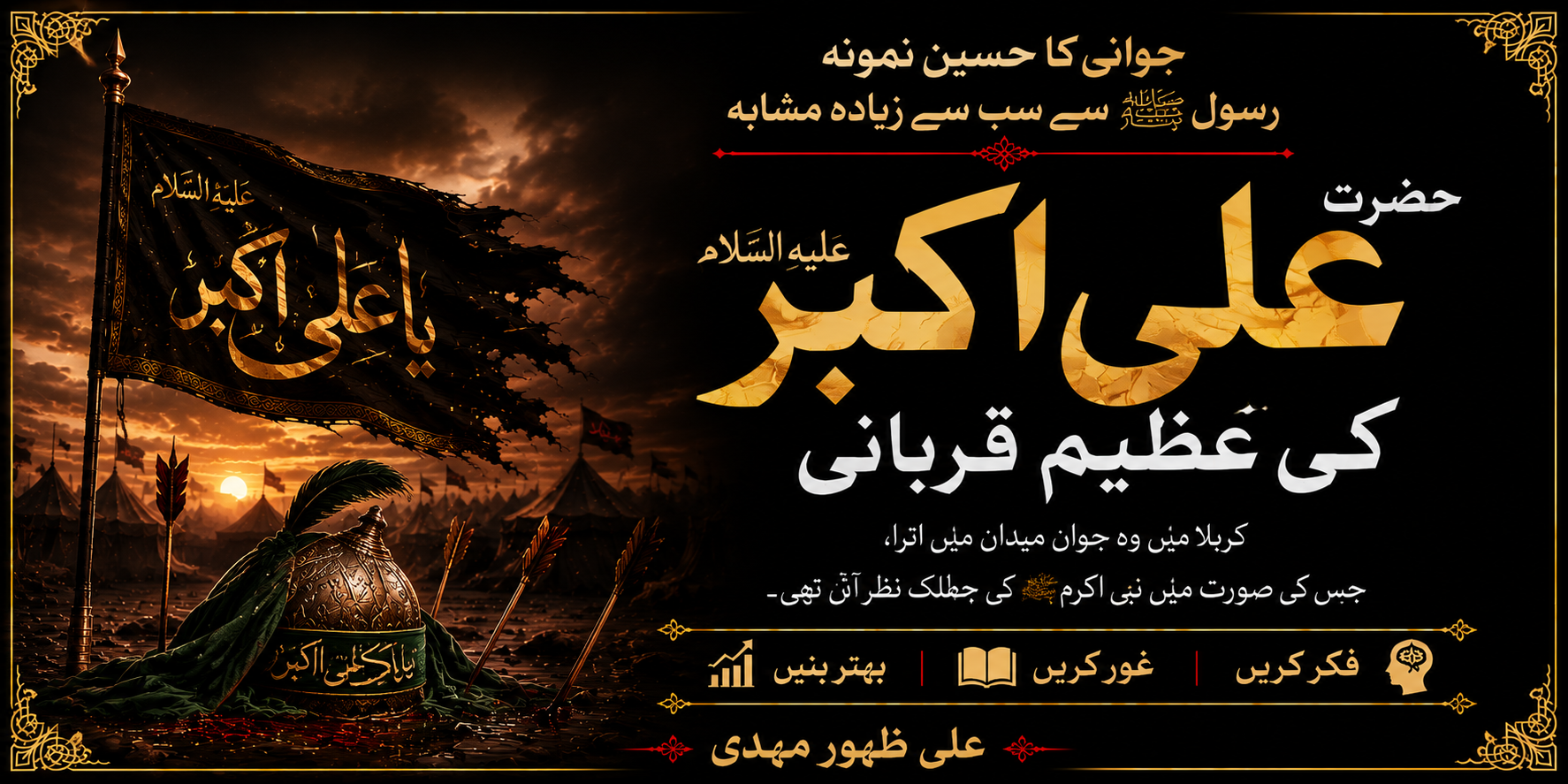
Among the tragedies of Karbala, the martyrdom of Hazrat Ali Akbar (AS) carries a unique sorrow. It is not only the loss of a young warrior. It is the grief of Imam Hussain (AS) watching his beloved son walk toward martyrdom, and the pain of seeing a young man who reminded the family of the Holy Prophet (PBUH) fall on the plains of Karbala.
Hazrat Ali Akbar (AS) stands in the memory of Muharram as a symbol of noble youth, faith, courage, and sacrifice.
The Status of Hazrat Ali Akbar (AS)
Hazrat Ali Akbar (AS) was the son of Imam Hussain (AS). He is remembered for his dignity, refined character, bravery, and devotion. In Shia sources, he is described as the one who most closely resembled the Holy Prophet (PBUH) in appearance, character, and speech.
This is one of the reasons his martyrdom is remembered with such deep pain. For the family of Imam Hussain (AS), Ali Akbar (AS) was not only a beloved son. He was also a living reminder of the Messenger of Allah (PBUH).
This narration is reported in major Shia Karbala sources including Al-Luhuf, Nafas al-Mahmum, and historical sections of Al-Irshad.
The Pain of Resemblance to the Prophet
The grief of Hazrat Ali Akbar (AS) is intensified by this resemblance. When Imam Hussain (AS) watched him go toward the battlefield, it was not merely the departure of a son. It was the departure of a young man whose presence recalled the Prophet (PBUH) to the household of Ahl al-Bayt (AS).
This gives the tragedy of Ali Akbar (AS) a depth that words can hardly contain. Karbala was not asking Imam Hussain (AS) to sacrifice from the margins of his life. It demanded the sacrifice of what was dearest to his heart.
The Sacrifice of Youth
Youth usually represents strength, beauty, hope, and the future. The martyrdom of Hazrat Ali Akbar (AS) transforms that meaning. It shows that youth reaches its highest honor when it is placed in the service of truth.
His sacrifice teaches that young age is not only a phase of life. It can also become a stage of moral greatness, devotion, and loyalty to a divine cause.
For this reason, Hazrat Ali Akbar (AS) remains one of the strongest examples for Muslim youth. He shows that real honor is not in fame, comfort, or worldly success, but in purity of character and commitment to what is right.
The Farewell to the Battlefield
The moment Hazrat Ali Akbar (AS) sought permission to enter the battlefield was one of the most painful scenes of Karbala. Imam Hussain (AS) was not sending an ordinary soldier. He was sending his young son, knowing well what awaited him.
This moment reveals the depth of Hussain’s patience. The heart of a father was in pain, yet the mission of truth remained above personal grief. Karbala teaches us here that faith does not remove sorrow, but it gives sorrow purpose and dignity.
Karbala and the Trial of Loss
The Qur’an says:
“And We will surely test you with something of fear and hunger and a loss of wealth, lives, and fruits; but give good news to the patient.” > (Surah Al-Baqarah 2:155)
In Karbala, this verse feels painfully alive. There was fear, thirst, loss, and unbearable grief, yet there was also patience, submission to Allah, and unwavering commitment to truth. The martyrdom of Hazrat Ali Akbar (AS) is one of the clearest examples of this painful but elevated trial.
A Message for Today’s Youth
Remembering Hazrat Ali Akbar (AS) should not remain only an emotional act. It should also be a lesson in how youth can be used with purpose.
His life teaches that:
- character matters more than appearance
- faith gives meaning to strength
- dignity is greater than popularity
- youth becomes noble when it serves truth
- sacrifice for what is right is greater than comfort without purpose
In a time when youth is often defined by image, attention, and self-interest, Hazrat Ali Akbar (AS) reminds us that the best years of life should also be the years of sincerity, growth, and moral responsibility.
Conclusion
The martyrdom of Hazrat Ali Akbar (AS) is one of the most heartbreaking chapters of Karbala. He was the youth who carried beauty with character, courage with faith, and loyalty with sacrifice.
By offering Ali Akbar (AS) in the path of truth, Imam Hussain (AS) showed the world that the preservation of faith is not achieved through slogans alone. It demands sincerity, endurance, and the willingness to give even what is most beloved.
That is why the memory of Hazrat Ali Akbar (AS) continues to move hearts. His youth did not pass into history as mere age. It became a witness to loyalty, dignity, and sacrifice in the path of Allah.
References
- Sayyid Ibn Tawus, Al-Luhuf ala Qatla al-Tufuf
- Shaykh Abbas Qummi, Nafas al-Mahmum
- Shaykh al-Mufid, Al-Irshad
- Allama Majlisi, Bihar al-Anwar, Vol. 45
- The Holy Qur’an, Surah Al-Baqarah 2:155
Reflection Question
Am I using my youth only for personal goals, or am I also dedicating it to truth, character, and the pleasure of Allah?
کربلا کے مصائب میں حضرت علی اکبرؑ کی شہادت ایک ایسا باب ہے جو دل کو گہری چوٹ دیتا ہے۔ یہ صرف ایک جوان شہید کا ذکر نہیں، بلکہ امام حسینؑ کے سامنے ان کے جوان فرزند کی قربانی کا غم ہے۔ حضرت علی اکبرؑ وہ ہستی تھے جن میں اہلِ بیتؑ کو رسول اللہ ﷺ کی جھلک نظر آتی تھی۔ اسی لیے ان کی شہادت نے کربلا کے غم کو اور زیادہ دل سوز بنا دیا۔
حضرت علی اکبرؑ کا مقام
حضرت علی اکبرؑ امام حسینؑ کے فرزند تھے۔ آپؑ جوانی، ادب، ایمان، شجاعت اور پاکیزہ کردار کا روشن نمونہ تھے۔ کربلا میں آپؑ کی موجودگی اہلِ بیتؑ کے لیے تسکین کا سبب تھی، کیونکہ آپؑ صرف ایک بہادر جوان نہیں بلکہ رسول اللہ ﷺ کی یاد تازہ کرنے والی شخصیت تھے۔
- شیعہ مآخذ میں نقل ہوا ہے کہ امام حسینؑ نے حضرت علی اکبرؑ کے بارے میں فرمایا کہ وہ صورت، سیرت اور گفتگو میں رسول اللہ ﷺ سے بہت زیادہ مشابہ تھے۔
- یہ مضمون سید ابن طاؤوس کی کتاب اللہوف اور شیخ عباس قمی کی نفس المهموم میں واقعۂ کربلا کے بیان میں ذکر ہوا ہے۔
مشابہتِ رسولؐ کا غم
حضرت علی اکبرؑ کی شہادت کا درد اس لیے بھی شدید ہے کہ آپؑ اہلِ بیتؑ کے لیے رسول خدا ﷺ کی یاد تھے۔ جب امام حسینؑ نے علی اکبرؑ کو میدان کی طرف جاتے دیکھا تو یہ صرف ایک بیٹے کی رخصتی نہیں تھی، بلکہ گویا رسول اللہ ﷺ کی مشابہت رکھنے والا جوان میدانِ شہادت کی طرف جا رہا تھا۔
یہاں کربلا ہمیں بتاتی ہے کہ امام حسینؑ نے حق کے لیے صرف اپنی جان نہیں دی، بلکہ اپنی آنکھوں کا نور، اپنے گھر کا جوان چراغ، اور اپنے دل کا سہارا بھی پیش کر دیا۔
جوانی کی قربانی
جوانی امید، طاقت اور مستقبل کی علامت ہوتی ہے۔ حضرت علی اکبرؑ کی قربانی ہمیں یہ سمجھاتی ہے کہ اگر جوانی حق کے لیے وقف ہو جائے تو وہ عام زندگی سے بلند ہو کر تاریخ کا نور بن جاتی ہے۔
آج کے نوجوانوں کے لیے حضرت علی اکبرؑ کا کردار ایک بڑا پیغام رکھتا ہے۔ جوانی صرف خواہشات، شہرت یا دنیاوی کامیابی کے لیے نہیں، بلکہ کردار، ایمان اور مقصد کے لیے بھی ہونی چاہیے۔
میدانِ کربلا کی طرف روانگی
جب حضرت علی اکبرؑ نے میدان میں جانے کی اجازت چاہی تو امام حسینؑ کے لیے یہ لمحہ انتہائی دردناک تھا۔ ایک باپ اپنے جوان بیٹے کو دیکھ رہا تھا اور جانتا تھا کہ یہ سفر واپسی کا نہیں۔ مگر اہلِ بیتؑ کا راستہ اللہ کی رضا اور حق کی سربلندی کا راستہ تھا۔
یہی وہ مقام ہے جہاں صبرِ حسینؑ کی عظمت سامنے آتی ہے۔ دل زخمی تھا، مگر فیصلہ حق کے مطابق تھا۔ آنکھیں اشکبار تھیں، مگر قدم اللہ کی رضا پر قائم تھے۔
قرآن کی روشنی میں آزمائش
قرآن مجید فرماتا ہے:
"اور ہم ضرور تمہیں آزمائیں گے کچھ خوف، کچھ بھوک، مالوں، جانوں اور پھلوں کی کمی سے، اور صبر کرنے والوں کو خوشخبری دے دو۔" (سورۃ البقرہ 2:155)
کربلا اس آیت کی عملی تفسیر محسوس ہوتی ہے۔ وہاں خوف بھی تھا، پیاس بھی تھی، جانوں کی قربانی بھی تھی، اور اہلِ بیتؑ کا صبر بھی تھا۔ حضرت علی اکبرؑ کی شہادت اس عظیم آزمائش کا ایک دردناک مگر روشن باب ہے۔
آج کے لیے پیغام
حضرت علی اکبرؑ کی یاد صرف ماتم اور گریہ کا موضوع نہیں، بلکہ تربیت کا ذریعہ بھی ہے۔ آپؑ ہمیں سکھاتے ہیں کہ اصل خوبصورتی کردار میں ہے، اصل جوانی ایمان میں ہے، اور اصل عظمت حق کے لیے قربانی میں ہے۔
آج اگر نوجوان حضرت علی اکبرؑ سے سبق لینا چاہیں تو سب سے بڑا سبق یہ ہے کہ اپنی جوانی کو بے مقصد نہ گزاریں۔ علم، اخلاق، خدمت، والدین کی عزت، دین سے تعلق، اور حق کے ساتھ وابستگی ہی جوانی کو بامعنی بناتے ہیں۔
نتیجہ
حضرت علی اکبرؑ کی شہادت کربلا کے سب سے دل گداز واقعات میں سے ہے۔ آپؑ نے اپنی جوانی راہِ حق میں قربان کر کے یہ پیغام دیا کہ دین کی بقا صرف الفاظ سے نہیں، بلکہ سب سے عزیز چیز قربان کرنے سے ہوتی ہے۔
کربلا ہمیں یہ سوچنے پر مجبور کرتی ہے کہ ہم اپنی زندگی، اپنی جوانی، اپنی صلاحیت اور اپنا وقت کس مقصد کے لیے استعمال کر رہے ہیں۔
حوالہ جات
- سید ابن طاؤوس، اللہوف علی قتلی الطفوف
- شیخ عباس قمی، نفس المهموم
- شیخ مفید، الارشاد، واقعۂ کربلا کے ابواب
- علامہ مجلسی، بحار الانوار، جلد 45
- قرآن مجید، سورۃ البقرہ 2:155
غور و فکر کا سوال
کیا میری جوانی صرف دنیاوی خواہشات میں گزر رہی ہے، یا میں اسے حق، کردار اور اللہ کی رضا کے لیے بھی استعمال کر رہا ہوں؟
This article is a collaborative effort between Artificial Intelligence and Prof. Ali Zahoor Mehdi. While AI assisted in drafting, the core insights, refinement, and final approval are strictly the author's work.
Comments (0)
Please keep comments respectful, relevant, and thoughtful.