The Best Among You Is the One Who Is Best to Others
بہترین انسان وہ ہے جو دوسروں کے لیے بہترین ہو: اخلاق اور تعلقات پر ایک اسلامی سبق
Every person longs to be respected, valued, and remembered with kindness. We spend years pursuing education, building careers, and achieving personal goals, yet one quality often determines how people truly remember us: the way we treat others.
A smile, a kind word, an act of forgiveness, or helping someone in need may seem small, but these simple actions often leave a deeper impact than wealth or status.
Islam places extraordinary importance on human relationships. The Qur'an repeatedly commands justice, kindness, and compassion, while the Ahl al-Bayt (AS) taught that good character is one of the greatest acts of worship.
Our relationship with Allah is reflected in the way we treat His creation.
The Qur'anic Foundation of Good Character
Allah says:
"Indeed, Allah commands justice, excellence, and giving to relatives, and forbids immorality, wrongdoing, and oppression."
Surah An-Nahl (16:90)
This verse is often described as one of the most comprehensive ethical teachings in the Qur'an.
It calls believers to:
- Be just.
- Show kindness beyond what is expected.
- Care for family and society.
- Avoid harming others.
Good relationships are not optional virtues; they are commands from Allah.
Allah also says:
"Speak kindly to people."
Surah Al-Baqarah (2:83)
Sometimes one kind sentence can heal a heart that has carried pain for years.
A Timeless Lesson from Imam Ali (AS)
Imam Ali (AS) said:
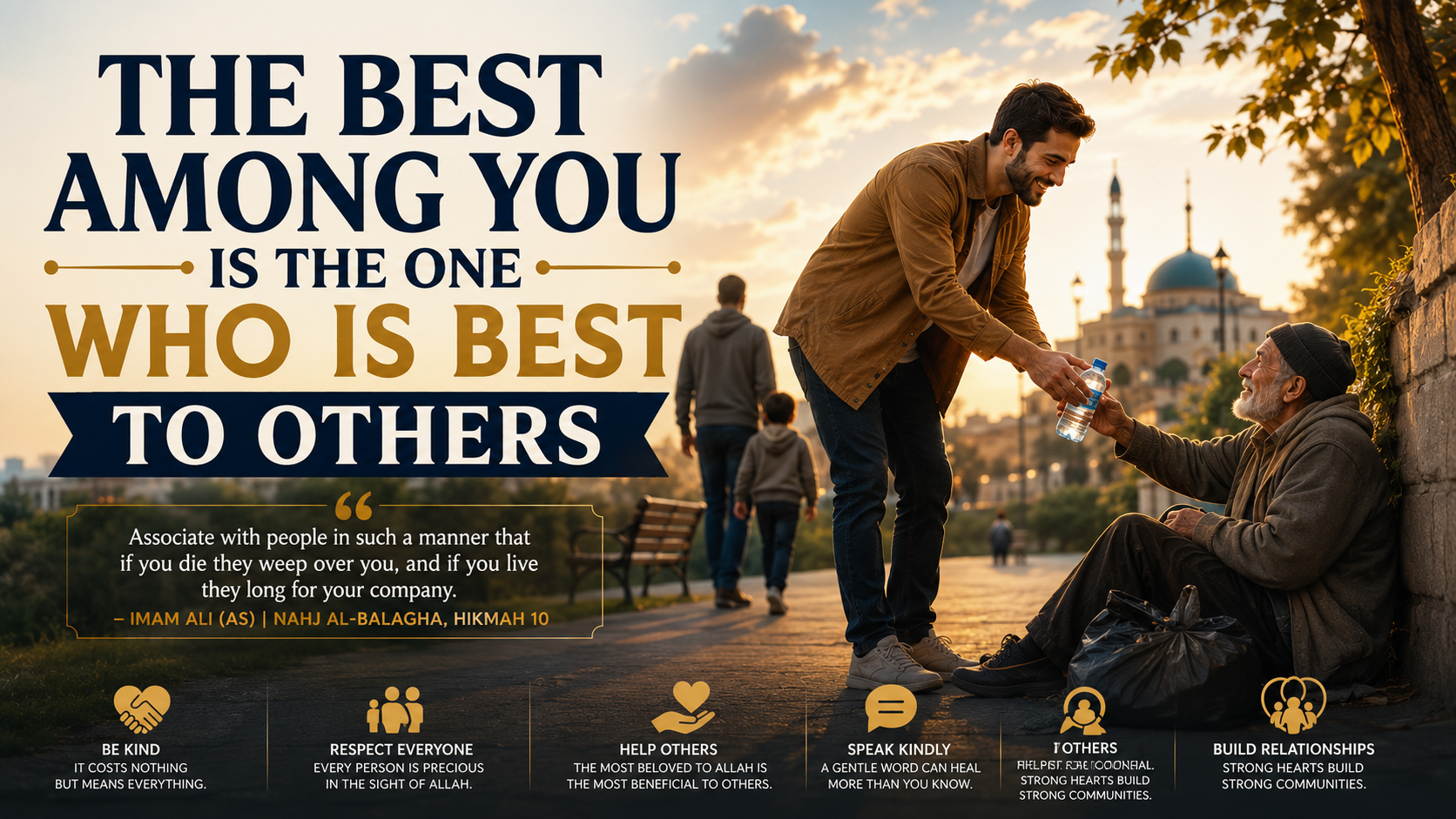
"Associate with people in such a manner that if you die they weep over you, and if you live they long for your company."
Reference: Nahj al-Balagha, Hikmah 10 (edition numbering may vary).
This profound advice teaches us to become people whose presence brings comfort and whose absence is sincerely felt.
True success is not measured by how many people know your name.
It is measured by how many lives became better because you were part of them.
Imam Ja'far al-Sadiq (AS) on Serving Others
Imam Ja'far al-Sadiq (AS) taught:
"The most beloved of people to Allah is the one who benefits His servants the most."
Reference: Al-Kafi, Shaykh al-Kulayni, Kitab al-Iman wa al-Kufr.
This narration reminds us that faith is not limited to prayer and fasting.
Helping people... Removing someone's difficulty... Listening to a worried friend... Supporting parents... Encouraging a struggling student...
All of these are forms of worship when done sincerely for Allah.
Why Kindness Is Never Wasted
Many people hesitate to be kind because they fear being taken for granted.
Islam encourages kindness regardless of whether people appreciate it.
Your reward comes from Allah before it comes from people.
Every sincere smile... Every act of generosity... Every moment of patience... Every word of encouragement...
Is recorded by the One who never overlooks even the smallest good deed.
The Greatest Investment Is Relationships
People often spend years building wealth while neglecting relationships.
Money can purchase comfort. It cannot purchase trust.
Titles can earn authority. They cannot earn genuine love.
Relationships are built through consistent character.
Keeping promises. Speaking honestly. Forgiving mistakes. Respecting differences. Being present when someone needs you.
These small actions become the foundation of lasting relationships.
Lessons from Modern Psychology
Psychologist Dr. John Gottman, whose research on relationships spans decades, found that healthy relationships are built through consistent positive interactions rather than occasional grand gestures.
Similarly, Stephen R. Covey wrote in The 7 Habits of Highly Effective People that trust grows when our actions consistently match our values.
Modern research confirms what Islam taught centuries ago:
Character creates connection. Trust creates lasting relationships. Kindness strengthens communities.
Practical Ways to Become Better to Others
Listen Before You Speak
People often need understanding more than advice.
Listening carefully is one of the greatest gifts we can offer.
Forgive Quickly
Holding onto resentment usually hurts the person carrying it more than the person who caused it.
Forgiveness frees the heart.
Speak with Respect
Disagreements are natural.
Disrespect is a choice.
Strong character allows us to disagree without insulting others.
Keep Your Promises
Reliability builds trust.
Trust builds relationships.
Help Without Expecting Recognition
The purest acts of kindness are often the ones no one else notices.
Allah notices every one of them.
Building a Legacy Through Character
History remembers many people for their wealth or achievements.
The greatest people, however, are remembered because they made others feel valued.
Imam Ali (AS) remains beloved across generations not only because of his knowledge and courage, but because of his justice, compassion, humility, and service to humanity.
His life teaches us that greatness is measured not by what we possess, but by how many hearts we touch.
Conclusion
Every day gives us countless opportunities to make someone's life easier.
A kind word. An honest conversation. A helping hand. A forgiving heart.
These actions require very little, yet they can transform lives.
The Qur'an commands kindness. The Ahl al-Bayt (AS) embodied kindness. Modern research confirms the power of kindness.
The question is whether we choose to practice it.
When people remember us, may they remember someone who brought peace rather than conflict, hope rather than discouragement, and compassion rather than judgment.
Because the best among us are not those who own the most, but those who leave the greatest positive impact on others.
References
- The Holy Qur'an, Surah An-Nahl (16:90).
- The Holy Qur'an, Surah Al-Baqarah (2:83).
- Nahj al-Balagha, Hikmah 10 (edition numbering may vary).
- Al-Kafi, Shaykh al-Kulayni, Kitab al-Iman wa al-Kufr.
- Stephen R. Covey, The 7 Habits of Highly Effective People.
- John Gottman, The Seven Principles for Making Marriage Work.
Reflection Question
If someone described me through the way I treat others, would they remember kindness, honesty, patience, and compassion, or would they remember something I still need to improve?
ہر انسان یہ چاہتا ہے کہ لوگ اس کا احترام کریں، اس سے محبت کریں اور اسے اچھے الفاظ میں یاد رکھیں۔ ہم تعلیم حاصل کرتے ہیں، محنت کرتے ہیں، دولت کماتے ہیں اور زندگی میں کامیاب ہونے کی کوشش کرتے ہیں، لیکن آخرکار لوگوں کے دلوں میں ہماری جگہ ہمارے کردار اور دوسروں کے ساتھ ہمارے رویے سے بنتی ہے۔
ایک مسکراہٹ، ایک نرم لہجہ، ایک سچا مشورہ، ایک معاف کر دینے والا دل یا ضرورت مند کی مدد، یہ وہ اعمال ہیں جو انسان کو حقیقی عزت عطا کرتے ہیں۔
اسلام صرف عبادات کی تعلیم نہیں دیتا بلکہ بہترین اخلاق اور اچھے تعلقات کو بھی ایمان کا اہم حصہ قرار دیتا ہے۔ قرآنِ مجید اور اہلِ بیتؑ کی تعلیمات ہمیں بار بار یاد دلاتی ہیں کہ اللہ تعالیٰ کی رضا حاصل کرنے کا ایک اہم راستہ اس کی مخلوق کے ساتھ حسنِ سلوک ہے۔
قرآنِ مجید کی تعلیم
اللہ تعالیٰ فرماتا ہے:
"بے شک اللہ انصاف، احسان اور رشتہ داروں کو دینے کا حکم دیتا ہے، اور بے حیائی، برائی اور ظلم سے منع کرتا ہے۔"
(سورۃ النحل، 16:90)
یہ آیت قرآنِ مجید کی جامع ترین اخلاقی تعلیمات میں شمار ہوتی ہے۔
اللہ تعالیٰ ہمیں حکم دیتا ہے کہ:
- انصاف کریں۔
- دوسروں کے ساتھ احسان کریں۔
- اپنے رشتہ داروں کا خیال رکھیں۔
- ظلم اور زیادتی سے بچیں۔
یعنی ایک کامیاب مسلمان صرف عبادت گزار نہیں ہوتا بلکہ انصاف پسند، رحم دل اور دوسروں کے لیے فائدہ مند بھی ہوتا ہے۔
ایک اور مقام پر اللہ تعالیٰ فرماتا ہے:
"اور لوگوں سے بھلی بات کہو۔"
(سورۃ البقرہ، 2:83)
بعض اوقات ایک نرم اور محبت بھرا جملہ کسی ٹوٹے ہوئے دل کو جوڑ دیتا ہے، جبکہ ایک سخت لفظ برسوں کے تعلق کو ختم کر سکتا ہے۔
امام علیؑ کی سنہری نصیحت
امیرالمؤمنین حضرت علیؑ فرماتے ہیں:
"لوگوں کے ساتھ اس طرح زندگی گزارو کہ اگر تم دنیا سے چلے جاؤ تو وہ تم پر روئیں، اور اگر زندہ رہو تو تمہاری ملاقات کے مشتاق رہیں۔"
حوالہ: نہج البلاغہ، حکمت 10 (مختلف نسخوں میں نمبر مختلف ہو سکتا ہے۔)
یہ مختصر مگر گہرا فرمان ہمیں سکھاتا ہے کہ انسان کی اصل کامیابی اس کے مال، شہرت یا عہدے میں نہیں بلکہ اس بات میں ہے کہ اس کی موجودگی دوسروں کے لیے راحت اور سکون کا سبب بنے۔
ایسا کردار اختیار کریں کہ لوگ آپ کے ساتھ وقت گزار کر خوش ہوں، نہ کہ آپ سے دور رہنے کی کوشش کریں۔
امام جعفر صادقؑ کی تعلیم
امام جعفر صادقؑ فرماتے ہیں:
"اللہ تعالیٰ کے نزدیک سب سے محبوب انسان وہ ہے جو اس کے بندوں کو سب سے زیادہ فائدہ پہنچائے۔"
حوالہ: الکافی، شیخ کلینی، کتاب الایمان والکفر۔
یہ روایت ہمیں بتاتی ہے کہ عبادت صرف نماز، روزہ اور دعا تک محدود نہیں۔
اگر آپ:
- کسی پریشان شخص کی مدد کریں،
- کسی غمزدہ انسان کی بات سن لیں،
- کسی طالب علم کی رہنمائی کریں،
- اپنے والدین کی خدمت کریں،
- کسی محتاج کی ضرورت پوری کریں،
تو یہ سب بھی اللہ کی رضا کے لیے کی گئی عبادت ہیں۔
اچھا اخلاق کبھی ضائع نہیں جاتا
بعض لوگ یہ سوچتے ہیں کہ اگر ہم ہر کسی کے ساتھ اچھا سلوک کریں گے تو لوگ ہمیں کمزور سمجھیں گے۔
اسلام اس سوچ کی اصلاح کرتا ہے۔
اچھا اخلاق کمزوری نہیں بلکہ مضبوط شخصیت کی علامت ہے۔
ہو سکتا ہے لوگ آپ کی نیکی کو بھول جائیں، لیکن اللہ تعالیٰ ہر نیکی کو محفوظ رکھتا ہے۔
ہر مسکراہٹ... ہر معافی... ہر نرم گفتگو... ہر مدد...
اللہ تعالیٰ کے نزدیک قیمتی ہے۔
سب سے قیمتی سرمایہ تعلقات ہیں
آج بہت سے لوگ دولت جمع کرنے میں پوری زندگی لگا دیتے ہیں، لیکن اپنے تعلقات کو وقت نہیں دیتے۔
دولت آرام خرید سکتی ہے۔ محبت نہیں۔
عہدہ اختیار دے سکتا ہے۔ اعتماد نہیں۔
اعتماد صرف کردار سے حاصل ہوتا ہے۔
وعدہ پورا کرنے سے... سچ بولنے سے... دوسروں کی عزت کرنے سے... اور مشکل وقت میں ساتھ دینے سے...
یہی وہ خوبیاں ہیں جو مضبوط تعلقات کی بنیاد بنتی ہیں۔
جدید تحقیق کیا کہتی ہے؟
مشہور ماہرِ نفسیات ڈاکٹر جان گوٹمین نے کئی دہائیوں کی تحقیق کے بعد یہ نتیجہ اخذ کیا کہ مضبوط تعلقات بڑی بڑی قربانیوں سے نہیں بلکہ روزمرہ کے چھوٹے مثبت رویوں سے بنتے ہیں۔
اسی طرح اسٹیفن آر کووی اپنی معروف کتاب The 7 Habits of Highly Effective People میں لکھتے ہیں کہ اعتماد اس وقت پیدا ہوتا ہے جب انسان کے الفاظ اور اعمال ایک جیسے ہوں۔
یہی تعلیم اسلام نے چودہ سو سال پہلے دی تھی۔
حسنِ اخلاق اعتماد پیدا کرتا ہے۔ اعتماد مضبوط تعلقات پیدا کرتا ہے۔ اور مضبوط تعلقات ایک مضبوط معاشرہ بناتے ہیں۔
دوسروں کے لیے بہتر انسان کیسے بنیں؟
پہلے سنیں، پھر بولیں
اکثر لوگوں کو مشورے سے زیادہ ایک اچھا سننے والا چاہیے ہوتا ہے۔
جلد معاف کریں
دل میں نفرت پالنا سب سے پہلے اپنے دل کو نقصان پہنچاتا ہے۔
معاف کرنا دل کو سکون دیتا ہے۔
احترام سے گفتگو کریں
اختلاف ہونا فطری بات ہے۔
بے ادبی اختیار کرنا ہمارا انتخاب ہوتا ہے۔
اچھا کردار اختلاف کے باوجود احترام برقرار رکھتا ہے۔
وعدہ پورا کریں
اعتماد ایک دن میں نہیں بنتا۔
یہ ہر پورے کیے گئے وعدے سے مضبوط ہوتا ہے۔
بغیر شہرت کی خواہش کے مدد کریں
سب سے خوبصورت نیکیاں وہ ہوتی ہیں جنہیں صرف اللہ تعالیٰ جانتا ہے۔
ایسا کردار چھوڑیں جو ہمیشہ زندہ رہے
تاریخ بہت سے لوگوں کو ان کی دولت یا طاقت کی وجہ سے یاد رکھتی ہے، لیکن عظیم انسانوں کو ان کے اخلاق کی وجہ سے ہمیشہ عزت ملتی ہے۔
امام علیؑ آج بھی دنیا بھر میں صرف اپنی بہادری کی وجہ سے نہیں بلکہ اپنے عدل، رحم، عاجزی، سخاوت اور انسان دوستی کی وجہ سے یاد کیے جاتے ہیں۔
ان کی زندگی ہمیں سکھاتی ہے کہ انسان کی اصل عظمت اس کے پاس موجود چیزوں میں نہیں بلکہ ان دلوں میں ہوتی ہے جنہیں وہ اپنی محبت اور کردار سے جیت لیتا ہے۔
نتیجہ
ہر دن ہمارے پاس ایک موقع ہوتا ہے کہ ہم کسی کی زندگی آسان بنا دیں۔
ایک نرم لفظ... ایک سچی دعا... ایک معاف کر دینے والا دل... ایک مدد کرنے والا ہاتھ...
یہ سب ایسے اعمال ہیں جن کی قیمت شاید دنیا نہ جانے، مگر اللہ تعالیٰ ضرور جانتا ہے۔
قرآن ہمیں حسنِ سلوک کا حکم دیتا ہے۔ اہلِ بیتؑ ہمیں اس پر عمل کر کے دکھاتے ہیں۔ اور جدید تحقیق بھی یہی ثابت کرتی ہے کہ بہترین تعلقات اچھے اخلاق سے بنتے ہیں۔
لہٰذا کوشش کریں کہ جب لوگ آپ کو یاد کریں تو انہیں آپ کا اخلاق، آپ کی دیانت، آپ کی شفقت اور آپ کی خدمت یاد آئے۔
کیونکہ حقیقی کامیابی یہ نہیں کہ لوگ آپ کو جانتے ہوں، بلکہ یہ ہے کہ آپ کی وجہ سے لوگوں کی زندگی بہتر ہوئی ہو۔
حوالہ جات
- قرآن مجید، سورۃ النحل (16:90)
- قرآن مجید، سورۃ البقرہ (2:83)
- نہج البلاغہ، حکمت 10
- الکافی، شیخ کلینی، کتاب الایمان والکفر
- Stephen R. Covey, The 7 Habits of Highly Effective People
- John Gottman, The Seven Principles for Making Marriage Work
غور و فکر کا سوال
اگر لوگ مجھے میرے اخلاق اور دوسروں کے ساتھ میرے رویے کی بنیاد پر یاد کریں، تو کیا وہ میرے بارے میں محبت، دیانت، صبر اور شفقت کی گواہی دیں گے، یا مجھے اپنے کردار میں مزید بہتری کی ضرورت ہے؟
This article is a collaborative effort between Artificial Intelligence and Prof. Ali Zahoor Mehdi. While AI assisted in drafting, the core insights, refinement, and final approval are strictly the author's work.
Comments (0)
Please keep comments respectful, relevant, and thoughtful.