When Silence Becomes a Crime
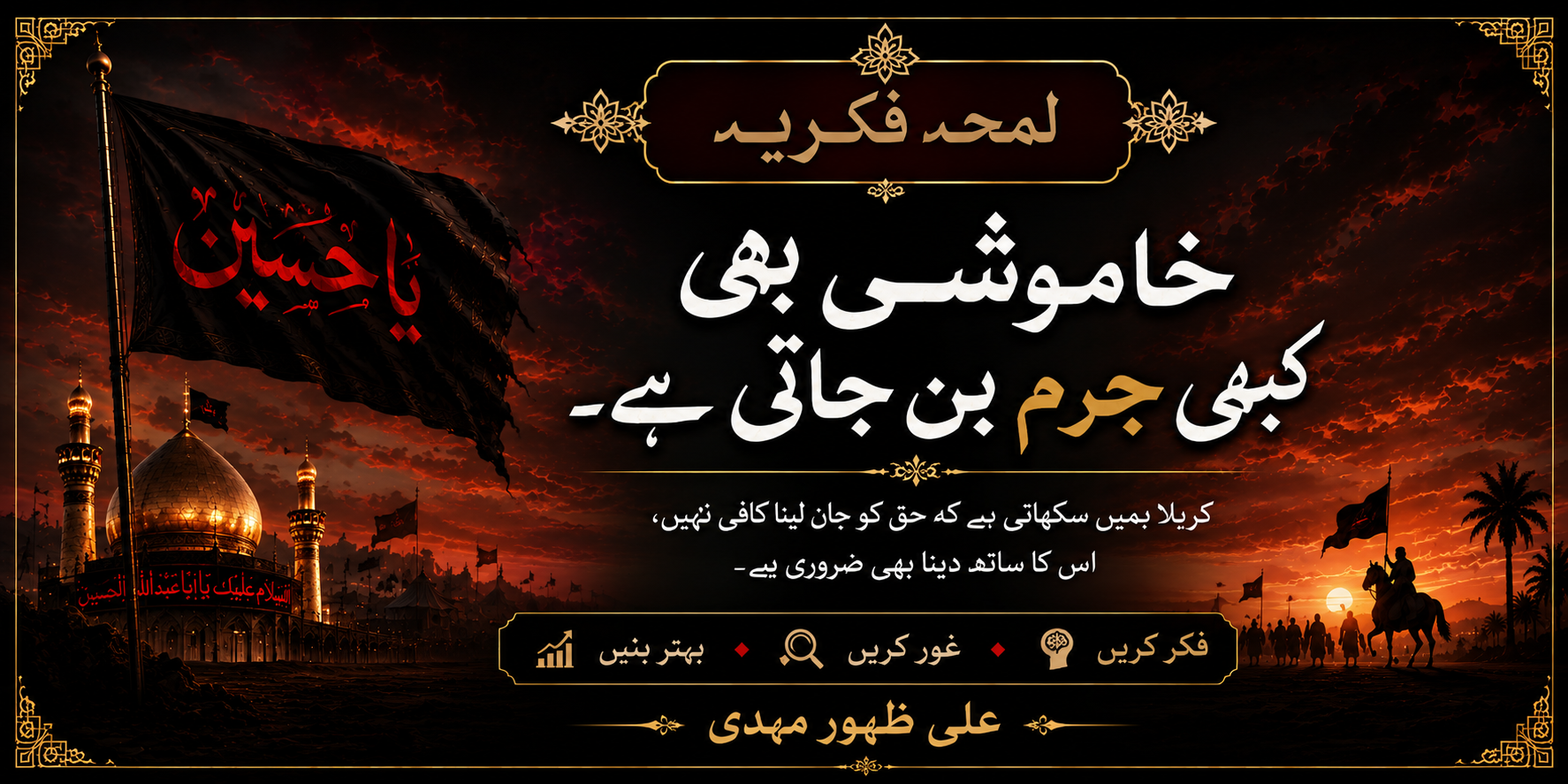
جب خاموشی جرم بن جائے
Muharram is not merely a remembrance of historical events. It is an opportunity to reflect upon timeless principles that continue to guide humanity. Among the many lessons of Karbala, one of the most profound is the danger of remaining silent in the face of injustice.
The tragedy of Karbala did not occur simply because there were oppressors. It also occurred because many people knew the truth but failed to support it. Some remained silent out of fear, others out of worldly interests, and some convinced themselves that neutrality was the safest path.
The message of Imam Hussain (AS) reminds us that there are moments in history when silence itself becomes a form of participation.
The Moral Challenge of Silence
Most people think that wrongdoing is committed only by those who actively engage in it. However, societies often suffer when good people choose not to speak, not to act, or not to stand for what is right.
History shows that injustice gains strength when it faces no resistance. Whether in families, communities, institutions, or nations, silence can allow falsehood to spread unchecked.
This does not mean that every disagreement requires confrontation. Islam teaches wisdom, patience, and proper conduct. Yet there are situations where remaining silent in the face of clear injustice weakens the moral fabric of society.
A Lesson from Karbala
Imam Hussain (AS) did not rise for power or personal gain. He openly declared the purpose of his movement as reform and the revival of the values taught by his grandfather, Prophet Muhammad (ﷺ).
Many people in that era recognized the noble character of Imam Hussain (AS). Yet only a small group stood beside him.
Some feared consequences.
Some prioritized worldly interests.
Some chose silence.
The events of Karbala remind us that knowing the truth is not enough. True faith requires the courage to uphold truth when it becomes difficult.
Guidance from the Holy Qur'an
Allah says in the Qur'an:
"And cooperate in righteousness and piety, but do not cooperate in sin and aggression."
(Surah Al-Ma'idah 5:2)
This verse teaches a fundamental principle. A believer should contribute to what is good and avoid supporting what is wrong.
Sometimes support is active. Sometimes it is moral. Sometimes it is simply refusing to remain indifferent when principles are at stake.
The Qur'an repeatedly encourages believers to stand for justice, honesty, and truth, even when doing so is challenging.
Silence in Modern Life
The lesson of Karbala is not limited to a battlefield fourteen centuries ago.
Today, silence can appear in many forms:
- Ignoring injustice in society.
- Remaining quiet when someone's rights are violated.
- Watching dishonesty spread without objection.
- Choosing convenience over principle.
- Allowing falsehood to prevail because speaking feels uncomfortable.
Every generation faces its own moral tests. While circumstances differ, the underlying challenge remains the same: Will we stand for what is right, or will we remain silent?
The Importance of Wisdom
Speaking against wrongdoing does not mean acting recklessly. Islam teaches wisdom, knowledge, patience, and good manners.
The goal is not conflict for its own sake. The goal is to uphold truth while preserving dignity and justice.
Imam Ali (AS) emphasized wisdom and thoughtful action throughout his teachings. A believer should seek the most effective and ethical way to support what is right.
Therefore, courage and wisdom must go together.
Practical Lessons from Day 3 of Muharram
- Do not ignore injustice simply because it is common.
- Develop the courage to speak truth respectfully.
- Stand with those who are treated unfairly.
- Prioritize principles over temporary benefits.
- Remember that silence can sometimes have consequences.
Conclusion
One of the enduring lessons of Karbala is that neutrality is not always possible. There are moments when moral responsibility demands a choice.
Imam Hussain (AS) showed humanity that truth has a value greater than comfort, safety, and worldly gain. His stand continues to inspire people across generations because it reminds us that justice survives through the courage of those who refuse to abandon it.
As we reflect during Muharram, we should ask not only what happened in Karbala, but also what lessons Karbala offers for our own lives.
Reflection Question
Are there situations in my life where remaining silent is easier than standing for what is right, and what does my conscience tell me to do?
محرم صرف ایک تاریخی واقعے کو یاد کرنے کا نام نہیں، بلکہ یہ اپنے کردار، سوچ اور ذمہ داریوں کا جائزہ لینے کا موقع بھی ہے۔ واقعۂ کربلا کا ایک اہم سبق یہ ہے کہ بعض اوقات خاموشی بھی جرم بن جاتی ہے۔
عام طور پر لوگ سمجھتے ہیں کہ ظلم صرف وہی کرتا ہے جو ظلم میں براہِ راست شریک ہو، لیکن تاریخ ہمیں بتاتی ہے کہ ظلم کو طاقت صرف ظالموں سے نہیں ملتی بلکہ ان لوگوں سے بھی ملتی ہے جو حق کو پہچاننے کے باوجود خاموش رہتے ہیں۔
کربلا کا پیغام یہی ہے کہ حق کو جان لینا کافی نہیں، بلکہ حق کا ساتھ دینا بھی ضروری ہے۔
کربلا کا ایک اہم سبق
امام حسینؑ نے اقتدار یا دنیاوی مفادات کے لیے قیام نہیں کیا تھا۔ آپؑ نے اپنے مقصد کو واضح کرتے ہوئے فرمایا کہ وہ امت کی اصلاح اور اپنے نانا حضرت محمد ﷺ کی تعلیمات کو زندہ کرنے کے لیے نکلے ہیں۔
اس دور میں بہت سے لوگ امام حسینؑ کے مقام اور فضیلت سے واقف تھے۔ وہ جانتے تھے کہ حق کس کے ساتھ ہے، لیکن سب لوگ حق کے ساتھ کھڑے نہ ہو سکے۔
کچھ لوگ خوف کا شکار تھے۔
کچھ دنیاوی مفادات میں گرفتار تھے۔
اور کچھ نے خاموش رہنے کو ہی محفوظ راستہ سمجھ لیا۔
تاریخ نے ہمیں یہ سبق دیا کہ جب حق اور باطل آمنے سامنے ہوں تو غیر جانبداری ہمیشہ دانشمندی نہیں ہوتی۔
قرآن مجید کی تعلیم
اللہ تعالیٰ فرماتا ہے:
"اور نیکی اور تقویٰ کے کاموں میں ایک دوسرے کی مدد کرو اور گناہ اور زیادتی کے کاموں میں ایک دوسرے کی مدد نہ کرو۔"
(سورۃ المائدہ، آیت 2)
یہ آیت صرف نیکی کرنے کا حکم نہیں دیتی بلکہ یہ بھی سکھاتی ہے کہ انسان کو ظلم اور زیادتی کے نظام کا حصہ نہیں بننا چاہیے۔
بعض اوقات انسان برا کام خود نہیں کرتا، لیکن اپنی خاموشی یا بے حسی کے ذریعے غلط کام کو جاری رہنے دیتا ہے۔ اسلام ہمیں اس رویے سے بچنے کی تعلیم دیتا ہے۔
خاموشی کیوں خطرناک ہے؟
خاموشی ہمیشہ حکمت نہیں ہوتی۔
کبھی خاموشی خوف کی وجہ سے ہوتی ہے۔
کبھی مفاد کی وجہ سے۔
اور کبھی اس سوچ کی وجہ سے کہ "مجھے کیا فرق پڑتا ہے۔"
لیکن جب معاشرے میں ناانصافی عام ہو جائے اور اہلِ حق خاموش رہیں تو باطل مزید مضبوط ہو جاتا ہے۔
اسی لیے تاریخ کے بڑے انقلابات چند ایسے لوگوں نے برپا کیے جو حق کے لیے کھڑے ہونے کا حوصلہ رکھتے تھے۔
آج کے دور میں کربلا کا پیغام
کربلا صرف ایک تاریخی میدان کا نام نہیں۔ آج بھی ہر انسان اپنی زندگی میں مختلف آزمائشوں کا سامنا کرتا ہے۔
کبھی سچ بولنے اور خاموش رہنے کے درمیان انتخاب کرنا پڑتا ہے۔
کبھی انصاف اور مفاد کے درمیان فیصلہ کرنا پڑتا ہے۔
کبھی کسی مظلوم کا ساتھ دینے یا خاموش رہنے کا سوال سامنے آتا ہے۔
یہی وہ مقامات ہیں جہاں کربلا کا پیغام زندہ ہو جاتا ہے۔
اگر ہم حق کو جانتے ہوئے بھی صرف اپنی آسانی اور مفاد کی خاطر خاموش رہ جائیں تو ہمیں سوچنا چاہیے کہ ہمارا رویہ ہمیں کس طرف لے جا رہا ہے۔
حکمت اور اعتدال کی ضرورت
یہ بھی ضروری ہے کہ حق کا ساتھ دیتے وقت حکمت کو فراموش نہ کیا جائے۔
اسلام جذباتی ردِعمل کے بجائے دانشمندانہ رویے کی تعلیم دیتا ہے۔
ہر بات کو سمجھداری، اچھے اخلاق اور مناسب طریقے سے بیان کرنا چاہیے۔ مقصد فساد پیدا کرنا نہیں بلکہ اصلاح اور بہتری لانا ہے۔
اسی لیے مؤمن کی پہچان صرف اس کی جرات نہیں بلکہ اس کی حکمت بھی ہوتی ہے۔
عملی اسباق
واقعۂ کربلا سے ہم چند اہم اسباق حاصل کرتے ہیں:
- حق کو پہچاننے کی کوشش کریں۔
- ظلم اور ناانصافی کو معمول نہ سمجھیں۔
- اپنے ضمیر کو زندہ رکھیں۔
- سچ بات کہنے کا حوصلہ پیدا کریں۔
- اپنی ذات، خاندان اور معاشرے میں انصاف کو فروغ دیں۔
- حق کا ساتھ دیتے وقت حکمت اور اخلاق کو اختیار کریں۔
نتیجہ
محرم ہمیں یہ یاد دلاتا ہے کہ بعض اوقات خاموشی بھی جرم بن جاتی ہے۔ جب حق واضح ہو جائے اور باطل سامنے آ جائے تو انسان کا امتحان شروع ہوتا ہے۔
امام حسینؑ کا پیغام صرف چودہ سو سال پہلے کے لوگوں کے لیے نہیں تھا، بلکہ آج بھی ہر اس شخص کے لیے ہے جو حق، انصاف اور انسانی وقار پر یقین رکھتا ہے۔
کربلا ہمیں سکھاتی ہے کہ سچائی کی حمایت ہمیشہ آسان نہیں ہوتی، لیکن یہی راستہ انسان کو عزت اور کامیابی عطا کرتا ہے۔
غور و فکر کا سوال
کیا میری زندگی میں کوئی ایسا موقع ہے جہاں میں حق کو جانتے ہوئے بھی خاموش رہ جاتا ہوں؟
This article is a collaborative effort between Artificial Intelligence and Prof. Ali Zahoor Mehdi. While AI assisted in drafting, the core insights, refinement, and final approval are strictly the author's work.
Comments (0)
Please keep comments respectful, relevant, and thoughtful.