When Silence Becomes a Crime
جب خاموشی جرم بن جائے
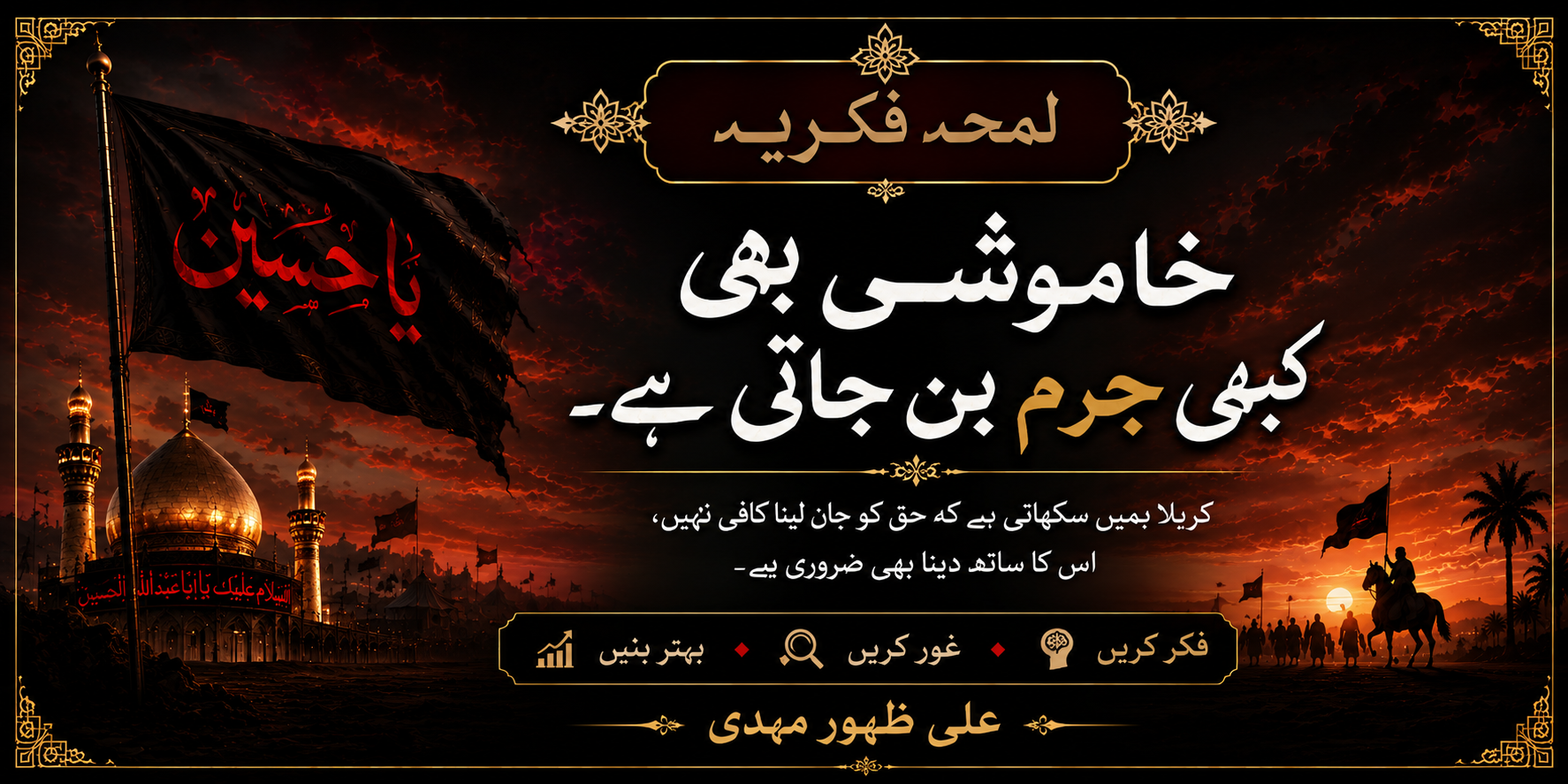
Muharram is not merely a remembrance of historical events. It is an opportunity to reflect upon timeless principles that continue to guide humanity. Among the many lessons of Karbala, one of the most profound is the danger of remaining silent in the face of injustice.
The tragedy of Karbala did not occur simply because there were oppressors. It also occurred because many people knew the truth but failed to support it. Some remained silent out of fear, others out of worldly interests, and some convinced themselves that neutrality was the safest path.
The message of Imam Hussain (AS) reminds us that there are moments in history when silence itself becomes a form of participation.
The Moral Challenge of Silence
Most people think that wrongdoing is committed only by those who actively engage in it. However, societies often suffer when good people choose not to speak, not to act, or not to stand for what is right.
History shows that injustice gains strength when it faces no resistance. Whether in families, communities, institutions, or nations, silence can allow falsehood to spread unchecked.
This does not mean that every disagreement requires confrontation. Islam teaches wisdom, patience, and proper conduct. Yet there are situations where remaining silent in the face of clear injustice weakens the moral fabric of society.
A Lesson from Karbala
Imam Hussain (AS) did not rise for power or personal gain. He openly declared the purpose of his movement as reform and the revival of the values taught by his grandfather, Prophet Muhammad (ﷺ).
Many people in that era recognized the noble character of Imam Hussain (AS). Yet only a small group stood beside him.
Some feared consequences.
Some prioritized worldly interests.
Some chose silence.
The events of Karbala remind us that knowing the truth is not enough. True faith requires the courage to uphold truth when it becomes difficult.
Guidance from the Holy Qur'an
Allah says in the Qur'an:
"And cooperate in righteousness and piety, but do not cooperate in sin and aggression."
(Surah Al-Ma'idah 5:2)
This verse teaches a fundamental principle. A believer should contribute to what is good and avoid supporting what is wrong.
Sometimes support is active. Sometimes it is moral. Sometimes it is simply refusing to remain indifferent when principles are at stake.
The Qur'an repeatedly encourages believers to stand for justice, honesty, and truth, even when doing so is challenging.
Silence in Modern Life
The lesson of Karbala is not limited to a battlefield fourteen centuries ago.
Today, silence can appear in many forms:
- Ignoring injustice in society.
- Remaining quiet when someone's rights are violated.
- Watching dishonesty spread without objection.
- Choosing convenience over principle.
- Allowing falsehood to prevail because speaking feels uncomfortable.
Every generation faces its own moral tests. While circumstances differ, the underlying challenge remains the same: Will we stand for what is right, or will we remain silent?
The Importance of Wisdom
Speaking against wrongdoing does not mean acting recklessly. Islam teaches wisdom, knowledge, patience, and good manners.
The goal is not conflict for its own sake. The goal is to uphold truth while preserving dignity and justice.
Imam Ali (AS) emphasized wisdom and thoughtful action throughout his teachings. A believer should seek the most effective and ethical way to support what is right.
Therefore, courage and wisdom must go together.
Practical Lessons from Day 3 of Muharram
- Do not ignore injustice simply because it is common.
- Develop the courage to speak truth respectfully.
- Stand with those who are treated unfairly.
- Prioritize principles over temporary benefits.
- Remember that silence can sometimes have consequences.
Conclusion
One of the enduring lessons of Karbala is that neutrality is not always possible. There are moments when moral responsibility demands a choice.
Imam Hussain (AS) showed humanity that truth has a value greater than comfort, safety, and worldly gain. His stand continues to inspire people across generations because it reminds us that justice survives through the courage of those who refuse to abandon it.
As we reflect during Muharram, we should ask not only what happened in Karbala, but also what lessons Karbala offers for our own lives.
Reflection Question
Are there situations in my life where remaining silent is easier than standing for what is right, and what does my conscience tell me to do?
This article is a collaborative effort between Artificial Intelligence and Prof. Ali Zahoor Mehdi. While AI assisted in drafting, the core insights, refinement, and final approval are strictly the author's work.
Comments (0)
Please keep comments respectful, relevant, and thoughtful.